
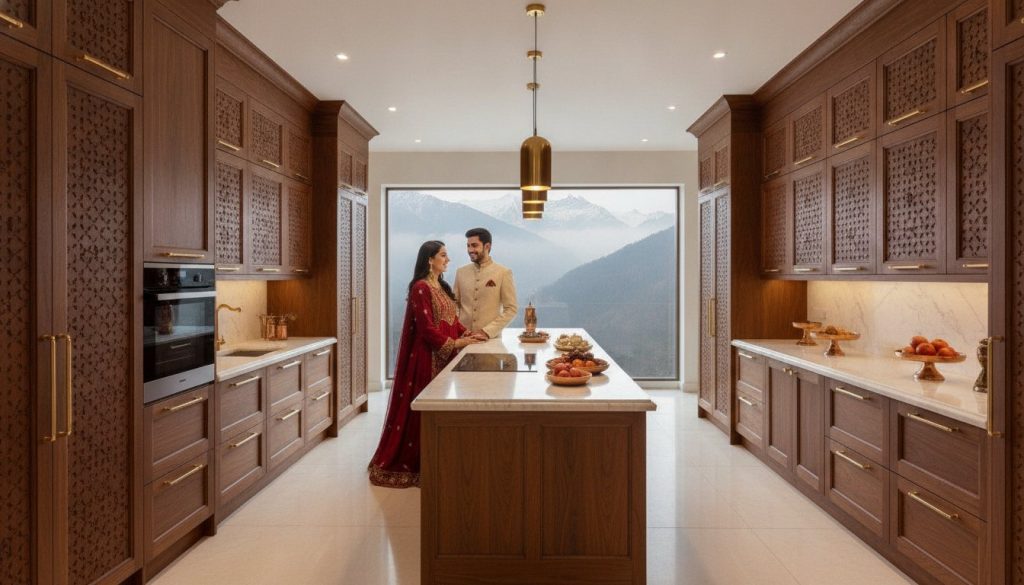
By October 2026, over 90 categories of electrical appliances in India must carry the ISI mark under new mandatory BIS safety certifications. This shift marks a turning point for homeowners who want reliable, high-performance kitchens that meet strict modern standards. Selecting the right built-in home appliances India offers is no longer just about aesthetics; it’s about ensuring your equipment handles heavy-duty cooking while meeting 2026 energy efficiency norms.
You likely know the frustration of limited counter space or the stubborn grease that settles on cabinets after traditional Indian cooking. It’s difficult to plan a kitchen when electrical requirements and cabinetry dimensions feel like a moving target. This guide simplifies that process. You’ll learn how to transform your kitchen into a clutter-free, efficient workspace tailored for the unique needs of Jammu and Kashmir residences.
We’ll examine the latest BEE star labeling updates, the rise of smart IoT-enabled hobs, and the specific ways built-in solutions protect your custom-made furniture from smoke damage. From understanding mandatory 2026 certifications to optimizing your modular layout, this overview provides the technical clarity you need for a functional home.
Key Takeaways
- Learn how the 2026 shift in modular kitchen design focuses on seamless integration to maximize floor space and visual appeal.
- Identify the high-performance built-in home appliances India homes need for efficient smoke extraction and heavy-duty cooking.
- Compare the maintenance benefits and cleaning requirements of built-in units against traditional free-standing models.
- Understand the essential electrical and cabinetry dimensions needed to coordinate with furniture manufacturers during your kitchen planning.
- Discover the advantages of pairing professional-grade appliances with bespoke wooden furniture for a reliable and cohesive home environment.
Understanding Built-in Home Appliances in the Indian Context
Built-in appliances are designed to fit into pre-cut cavities within your kitchen cabinetry rather than sitting on the floor or countertop. This creates a flush, streamlined appearance that defines modern Indian modular kitchens. As urban living expands, with 37% of India’s population residing in cities as of 2024, the demand for built-in home appliances India retailers provide has grown significantly. In Jammu and Kashmir, residences are increasingly moving away from free-standing units to these integrated solutions to better manage space and improve the overall utility of high-traffic cooking areas. For those unfamiliar with the broader categories, a home appliance overview provides a useful baseline for understanding how major machinery differs from smaller, portable tools.
The aesthetic shift for 2026 centers on minimalism and high-performance durability. Homeowners now prioritize kitchens that look like extensions of their living spaces. This trend is driven by a need for order and the desire to protect custom-made furniture from the steam and grease common in Indian households. By choosing built-in options, you ensure your appliances are fixed securely within high-quality cabinetry. This prevents the movement and vibration often found with standalone models. Selecting the right built-in home appliances India offers requires understanding how these machines interact with your physical space.
The Functional Appeal of Integrated Design
Integrated design eliminates the “dead zones” found between traditional stoves and cabinets. These gaps often collect dust, food particles, and grease; they make deep cleaning difficult. Built-in hobs and ovens seal these areas, promoting a more hygienic environment. Beyond cleanliness, these units streamline the kitchen workflow by allowing for ergonomic placement, such as eye-level ovens that reduce the need for bending. Modern kitchen upgrades like these also contribute to higher property values because they represent a long-term investment in the home’s infrastructure.
Built-in vs. Integrated: Knowing the Difference
While the terms are often used interchangeably, there’s a distinction. Built-in appliances typically feature a visible front panel, such as a stainless steel oven door or a glass hob surface. Fully integrated units are completely hidden behind furniture doors that match your cabinetry. At Al Hammad International trd, we focus on helping you match these appliance finishes with custom furniture styles. Whether you prefer the industrial look of exposed steel or the seamless feel of hidden refrigeration, the goal is a cohesive design that functions reliably under heavy daily use.
Essential Built-in Appliances for Modern Indian Kitchens
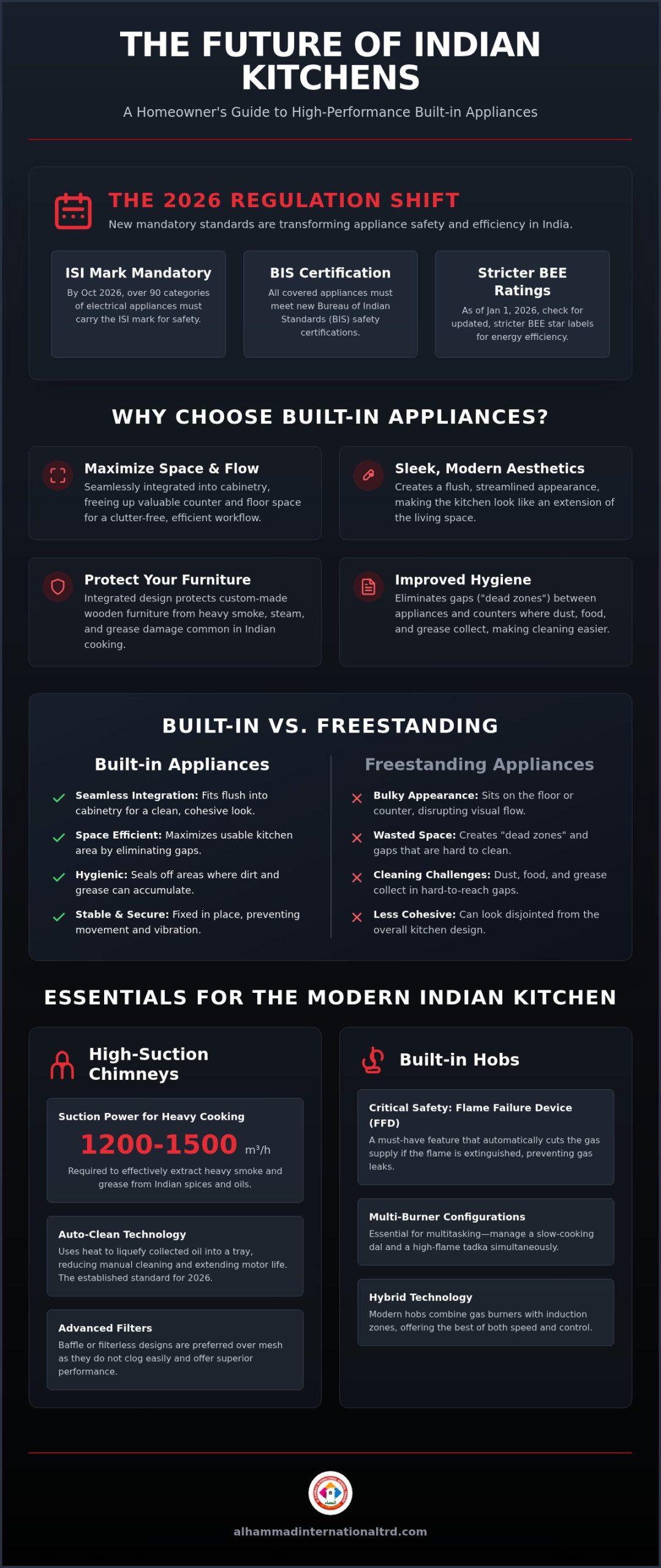
Modern Indian cooking requires equipment that can handle high heat, heavy steam, and aromatic spices without compromising the kitchen’s integrity. Selecting the right built-in home appliances India offers means looking beyond basic functionality to find systems that work together. As of January 1, 2026, the Bureau of Energy Efficiency (BEE) has implemented stricter star labeling norms, making it vital to check updated ratings before purchase. These standards ensure that high-performance hobs and chimneys don’t lead to excessive energy consumption during daily use.
High-Suction Chimneys and Auto-Clean Technology
In a kitchen where spices and oils are used frequently, a standard chimney often fails. Suction power between 1200 and 1500 m3/h is necessary to effectively extract heavy smoke and prevent grease from settling on your custom cabinetry. Filterless designs and baffle filters are preferred because they don’t clog as easily as mesh alternatives. Auto-Clean technology is the established standard for 2026 maintenance-free operation. This feature uses heat to liquefy oil and collect it in a separate tray, which reduces the need for manual scrubbing and extends the motor’s lifespan.
Built-in Hobs: Safety and Efficiency
Traditional stoves are being replaced by built-in hobs that sit flush with the countertop. Multi-burner configurations are essential for multitasking, allowing you to manage slow-cooking dals alongside high-flame tadkas. Safety is a priority; look for Flame Failure Devices (FFD) that automatically cut off the gas supply if the flame goes out. While toughened glass finishes remain popular for their sleek look, stainless steel options offer extreme durability for high-traffic environments. Hybrid hobs, which combine induction zones with gas burners, are also gaining traction for their versatility and precision.
Beyond the stovetop, integrated ovens and microwaves with convection and grill features allow for healthier cooking methods like air-frying or roasting. Integrated dishwashers have also evolved to accommodate large Indian utensils, such as kadhais and patilas, using high-pressure jets and specialized cycles. These machines are designed to fit perfectly within your furniture layout. For those planning a renovation, browsing a curated range of built-in home appliances India retailers provide ensures you find models that match your specific cabinetry dimensions. You can explore a variety of premium home appliances designed for these modern requirements.
Choosing these essentials as a coordinated system ensures your kitchen remains smoke-free and efficient. When appliances are selected to match the specific demands of local cuisine, they perform better and last longer, providing a reliable foundation for your home.
Built-in vs. Free-standing: Making the Right Choice
Choosing between free-standing and integrated units depends on your kitchen’s layout and cooking habits. Free-standing appliances are traditional, portable, and easy to replace. However, they often create visual clutter and take up valuable floor area. In contrast, built-in home appliances India homeowners are now choosing provide a permanent, space-saving alternative. By mounting ovens and hobs directly into the cabinetry, you reclaim floor space and create a unified look. This setup is particularly beneficial in smaller urban kitchens where every square foot matters.
Maintenance is a major differentiator. Free-standing units leave gaps between the machine and the counter, allowing grease and food debris to accumulate in hard-to-reach places. Built-in units are sealed against the countertop or cabinet, preventing this buildup. While the initial installation of built-in units is more complex and requires precise cabinetry, the long-term hygiene benefits are superior. Research from organizations like the Centre for Science and Environment emphasizes the importance of choosing efficient, well-maintained equipment to reduce domestic waste and energy loss over time.
Space Optimization in Jammu and Kashmir Residences
In Jammu and Kashmir, where homes often feature traditional wooden interiors, utilizing vertical space is essential. Placing ovens and OTGs at chest height within a tall cabinet frees up counter space for meal preparation. This approach creates a seamless transition between the kitchen and dining areas, making the home feel more open. To achieve this, it’s vital to coordinate with experts in Custom Made Furniture in India. Proper planning ensures that the wooden housing for your built-in home appliances India selection is both durable and aesthetically aligned with your home’s decor.
Durability and Performance Comparisons
Built-in units often outperform free-standing models in two specific areas: heat management and noise reduction. Because these appliances are encased in cabinetry, the furniture acts as an extra layer of acoustic insulation, making dishwashers and ovens noticeably quieter. Manufacturers design built-in units with specialized cooling fans that vent heat through the front or top, protecting the surrounding wood. While free-standing units offer easier accessibility for quick repairs, the high-quality components used in premium built-in models generally offer a longer lifespan when properly ventilated and maintained within a stable cabinet structure.
Planning for Installation: Cabinetry and Electrical Requirements
Successful integration of built-in home appliances India homeowners select depends on planning before the first cabinet is cut. Unlike free-standing units that simply require floor space and a plug, built-in models become part of the kitchen’s structural layout. This process requires close coordination with furniture manufacturers to ensure every cavity matches the specific dimensions of your chosen equipment. Standard widths for hobs and ovens often center around 60cm or 90cm, but the internal clearance for wiring and gas pipes must be factored into the cabinet depth.
Cabinetry Design for Built-in Units
Kitchen cabinets housing built-in units must be built from heat-resistant materials to prevent warping or discoloration over time. High-wattage appliances like ovens generate significant heat; they require specific ventilation gaps at the rear or base of the cabinet to ensure air circulation. Reinforcing the base of the cabinet is also necessary for heavy items like built-in ovens or microwaves, which can place substantial stress on standard shelf supports. If you’re starting from scratch, reviewing a checklist of essential appliances for a new apartment India can help you prioritize which units need dedicated housing in your furniture plan.
Electrical and Plumbing Considerations
The electrical infrastructure of a modern kitchen must handle a high cumulative load. Most built-in ovens and hobs require dedicated 16A or 20A power points to operate safely under peak usage. You should place these sockets in adjacent cabinets rather than directly behind the appliance to allow for easy access and a flush fit. For integrated dishwashers, water inlets and drainage points must be positioned to avoid kinks in the hoses when the unit is pushed into place. It’s vital to conduct a professional electrical audit of your kitchen’s wiring before installation begins.
In Jammu and Kashmir residences, the architectural layout often involves thicker exterior walls for thermal insulation. This impacts how you plan ducting paths for kitchen chimneys. Long ducting runs with multiple bends reduce suction efficiency; therefore, planning the shortest possible path to an external vent is critical. You can view our full range of premium built-in appliances and custom cabinetry to see how these technical requirements are handled in professional designs.
Premium Appliance Solutions at Al Hammad International trd
Al Hammad International trd operates as a specialized provider in Jammu and Kashmir, focusing on the intersection of high-performance machinery and bespoke furniture design. Selecting the right built-in home appliances India retailers provide involves more than just picking a brand; it requires an understanding of how those units will perform within a specific architectural context. We act as an efficient facilitator, bridging the gap between global appliance manufacturing standards and the unique structural needs of residential spaces in the region.
Our curated selection is based on utilitarian reliability. We prioritize appliances that are built to withstand the high-traffic demands of a modern kitchen while maintaining their efficiency over time. By offering a professional selection of equipment alongside our furniture, we eliminate the coordination gaps that often lead to installation errors. This streamlined approach ensures that your kitchen remains a functional, orderly environment designed for long-term use.
The Advantage of a Combined Furniture and Appliance Source
The primary benefit of sourcing from Al Hammad International trd is the technical synergy between the appliance and its housing. When you choose a built-in oven or dishwasher, the internal dimensions of the cabinet must be precise to manage heat and weight correctly. Our team ensures that every custom-made cabinetry project incorporates the necessary ventilation paths and structural reinforcements discussed earlier in this guide. This creates a consistent aesthetic and a technically sound installation. For more details on our regional design approach, you can review our Premium Indoor Furniture Guide for J&K.
Reliability and Accessibility in J&K
Residences in Jammu and Kashmir require durable products that can handle local environmental factors and specific cooking styles. We provide professional guidance to help you navigate the variety of built-in home appliances India offers, focusing on models that provide the best performance for regional homes. Our inventory is organized to help you quickly identify the right categories for your renovation or new build, ensuring you have access to international-standard equipment without the complexity of uncoordinated sourcing.
We invite you to browse our appliance and furniture collections today to see how our integrated solutions can assist with your kitchen project. Our focus remains on delivering reliable, high-quality products that combine functionality with aesthetic order.
Building Your Modern Kitchen for 2026 and Beyond
Transitioning to an integrated kitchen is a strategic investment in both property value and daily efficiency. The move toward seamless design effectively addresses the maintenance challenges of high-heat cooking and the constraints of urban floor plans. By prioritizing precise cabinetry planning and adhering to updated energy standards, you create a workspace that is as durable as it is visually cohesive. It’s easier to manage your daily workflow when every machine has a dedicated, professional-grade placement that protects your furniture from steam and grease.
Selecting the right built-in home appliances India offers requires a focus on long-term reliability and local compatibility. Al Hammad International trd serves as a dependable facilitator in Jammu and Kashmir, ensuring that your high-performance equipment is perfectly paired with bespoke furniture. Our expertise in this integration provides homeowners with a streamlined path to a sophisticated and high-traffic kitchen. We prioritize durable selections that meet the specific environmental and culinary demands of the region.
View Our Premium Appliance and Custom Furniture Range
You can achieve a reliable and clutter-free home environment with the right technical preparation and quality components.
Frequently Asked Questions
What are the most essential built-in appliances for an Indian kitchen?
The most essential units for a functional Indian kitchen include:
- High-suction chimneys (1200-1500 m3/h) to handle heavy grease and spices.
- Multi-burner built-in hobs with Flame Failure Devices for safety.
- Convection ovens or microwaves for versatile baking and grilling.
- Integrated dishwashers sized for large utensils like kadhais and pressure cookers.
These appliances address the specific smoke and space challenges found in local households.
Do built-in appliances require special kitchen cabinets?
Yes, built-in units require cabinetry designed with specific cutouts and structural reinforcements. These cabinets must use heat-resistant materials and include ventilation gaps to prevent warping from high temperatures. At Al Hammad International, we specialize in custom-made furniture that provides the precise housing needed for built-in home appliances India residences require. Standard cabinets often lack the depth or weight-bearing capacity to support heavy machinery like integrated ovens safely.
Can I replace my old free-standing stove with a built-in hob?
You can replace a free-standing stove, but it requires cutting a precise cavity into your existing countertop. Built-in hobs sit flush with the surface, so the hole must match the unit’s dimensions exactly. You also need to ensure there is enough clearance below the counter for gas pipes and electrical connections. If your current cabinetry was not designed for this, you might need to modify internal shelves to accommodate the hob’s underside.
How do I maintain a built-in chimney with heavy Indian cooking?
Regular maintenance is vital for chimneys handling heavy grease and aromatic spices. You should clean baffle filters every two to three weeks using warm soapy water. For 2026 models, auto-clean technology is the standard, using heat to liquefy oil and collect it in a separate tray. This reduces the need for manual scrubbing. Ensuring the ducting path remains clear and free of obstructions helps maintain optimal suction power in high-traffic Jammu and Kashmir kitchens.
Is it difficult to repair built-in appliances if they break?
Repairing built-in units is straightforward for qualified technicians, although access can be more restricted than free-standing models. Most manufacturers design these appliances with front-facing components for easier servicing. You should contact the brand’s authorized service center for any technical issues. While Al Hammad International provides a high-quality selection of built-in home appliances India homeowners trust, we don’t provide repair services directly. Always check the warranty terms provided by the manufacturer.
What are the standard sizes for built-in ovens in India?
The standard width for built-in ovens in the Indian market is approximately 60cm, which fits most modular cabinet units. Some larger kitchens utilize 90cm models for higher cooking volumes. The internal capacity typically ranges from 60 to 85 liters. When planning your layout, you must account for an additional 2 to 5 centimeters of clearance at the rear for electrical wiring and heat dissipation to ensure the unit operates within safe temperature limits.
Do built-in appliances consume more electricity?
Built-in appliances don’t inherently consume more electricity than free-standing ones. Their consumption depends on the individual unit’s power rating and efficiency. As of January 2026, new BEE star labeling norms provide a clearer guide for energy consumption. Choosing a 4 or 5-star rated appliance ensures lower operational costs. Proper installation within ventilated cabinetry also prevents the motor from overworking, which helps maintain efficiency over the lifespan of the machine.
How do I choose the right suction power for a kitchen chimney?
For Indian kitchens, a suction power between 1200 and 1500 m3/h is recommended. This high capacity is necessary to extract the heavy smoke and grease generated by deep-frying and spice-heavy preparations. The size of your kitchen also matters; larger spaces or open-plan layouts benefit from higher suction rates. In Jammu and Kashmir residences, where ventilation paths might be longer due to thick walls, choosing a more powerful motor ensures smoke is effectively expelled.