
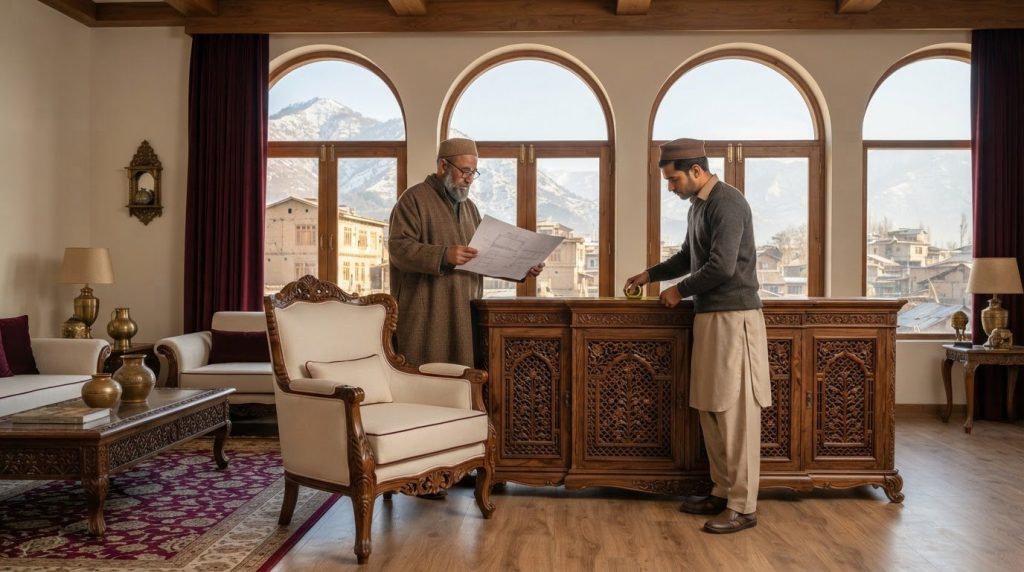
A catalogue image can show a piece’s appearance, but not whether it will fit your room or suit the way you use it. Searching for “bespoke furniture maker Srinagar” is a practical first step when ready-made furniture doesn’t match your space, dimensions or requirements.
A custom piece starts with a clear brief: where it will go, what it needs to do and which design details matter most. Al Hammad International trd offers custom-made furniture tailored to customer design requirements for residential and commercial spaces, indoors and outdoors.
This guide explains what to prepare before planning a bespoke piece, how to compare custom and ready-made options, and how to consider size, function and finish. You’ll also find a practical way to plan tailored indoor or outdoor furniture in Srinagar and Jammu and Kashmir. Start with the room and its everyday needs, then use those details to shape the design.
Key Takeaways
- A clear room brief helps a bespoke furniture maker Srinagar tailor a piece to your space, daily use and design preferences.
- Measure the intended furniture area and access route before describing your design requirements.
- Compare bespoke and ready-made furniture by fit, design flexibility, decision effort and intended use.
- For residential or commercial spaces, define how the furniture will be used and consider traffic, available space and maintenance needs.
- Al Hammad International trd offers custom-made furniture tailored to customer specifications for indoor and outdoor use.
What a Bespoke Furniture Maker in Srinagar Can Tailor to Your Space
A bespoke piece is planned around its dimensions, intended use and design preferences. Rather than choosing a standard item and adjusting only its colour or finish, you provide requirements that guide its size and function. This can be useful when a room has an unusual layout, existing furnishings limit placement, or you need a particular kind of storage.
What does bespoke furniture mean? Bespoke furniture is made to suit stated dimensions, functional needs and design preferences. The brief helps shape a piece for its intended space and use instead of relying only on the measurements and options of a standard design.
Made-to-order doesn’t automatically mean every detail can be specified without limits. The piece, available space and intended use all matter. A useful brief explains what the furniture needs to do and where it will go. For background on the craft involved, explore Woodworking techniques, which include methods used to make furniture and other wood-based items.
Which furniture needs may suit a bespoke approach?
Custom-made indoor and outdoor furniture can address different space and use requirements. A table may need to fit a defined area, seating may need to work around the way a room is used, or storage may need to keep particular items accessible or out of sight. Whether a bespoke approach suits your project depends on the piece, available space and intended use.
For residential or commercial projects, start by identifying the function, then describe your design preferences. Al Hammad International trd offers custom-made furniture tailored to customer design requirements for both indoor and outdoor settings.
When can custom dimensions make a difference?
Standard dimensions can be difficult to work with when a room has a narrow passage, an alcove or existing furniture that needs to stay in place. Measure the area for the piece and note the space people need to move around it. Measure the access route too, since doorways and turns can affect whether a piece can reach its intended position.
These measurements help establish the required footprint and clearances before you describe the design. A bespoke furniture maker Srinagar residents approach can use them, together with the piece’s intended function, to shape a customer-specific brief. Share the design preferences that matter most, while keeping the brief focused on practical needs and dimensions. This gives the project a clear starting point and leaves room to discuss which shapes, materials and specifications suit the particular piece.
How to Brief a Bespoke Furniture Maker in Srinagar
A clear brief turns a general idea into practical direction. Before describing a design to a bespoke furniture maker, Srinagar residents can set out what the piece needs to do, where it will sit and what matters most about its appearance. Keep measurements and preferences together so the discussion stays focused.
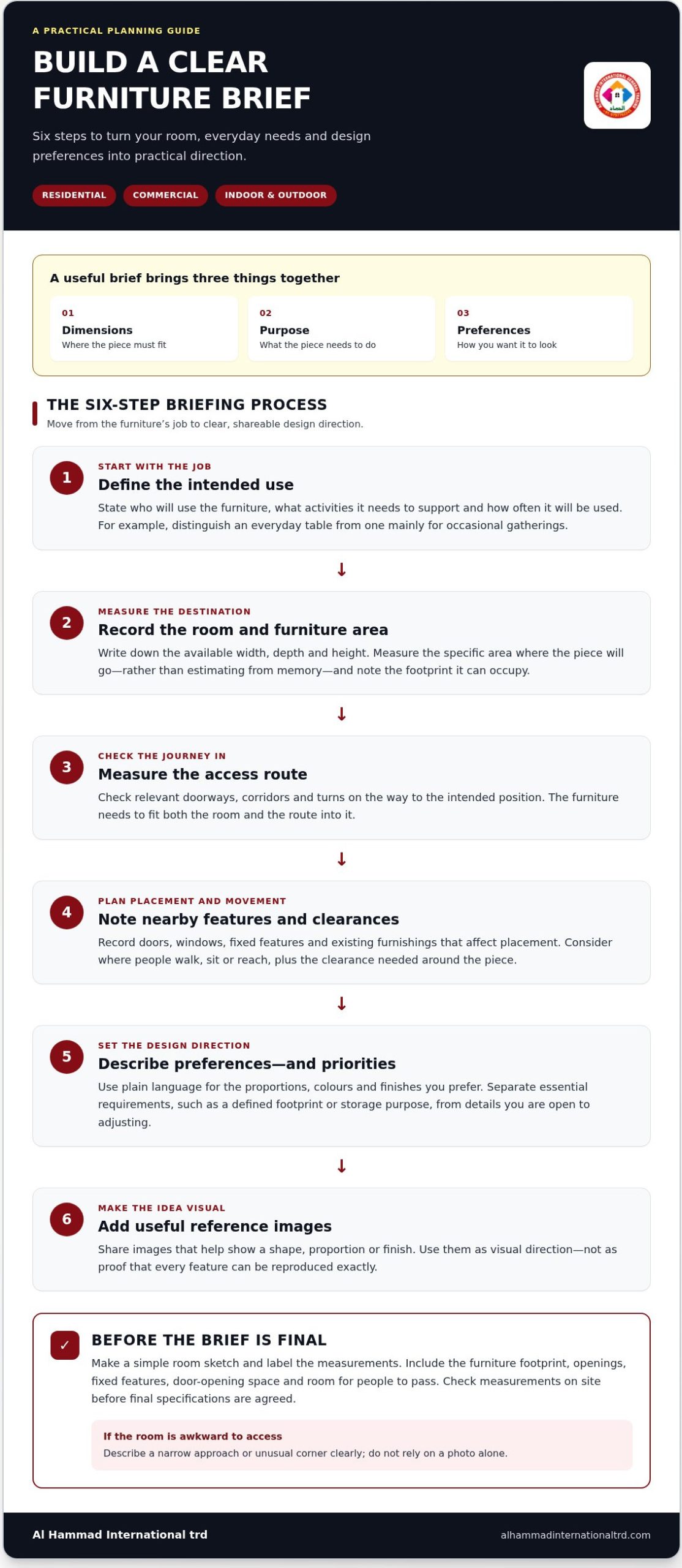
A useful furniture brief combines dimensions, purpose and preferences. Use these steps to prepare one:
- Step 1: Define the intended use. State who will use the furniture, what activities it needs to support and how often it will be used. For example, distinguish between a table for everyday use and one mainly for occasional gatherings.
- Step 2: Measure the room and furniture area. Record the available width, depth and height. Measure the specific area where the piece will go rather than estimating from memory.
- Step 3: Check the access route. Measure relevant doorways, corridors and turns along the route to the intended position. The piece needs to fit the room and pass through the access route.
- Step 4: Note nearby features and movement. Record doors, windows, fixed features and existing furnishings that may affect placement. Consider where people walk, sit or reach, and note the clearance needed around the furniture.
- Step 5: Describe design preferences. Use plain language to explain the proportions, colours and finishes you prefer. Separate essential requirements from details you’re open to adjusting as the project is planned.
- Step 6: Add visual references. Share images that show useful details, such as a shape, proportion or finish. Treat them as visual direction, not proof that every feature can be reproduced exactly.
What measurements and room details should you prepare?
Make a simple room sketch and label the measurements. Include the furniture footprint, nearby openings and fixed features, as well as the space needed for doors to open and people to pass. Check measurements on site before final specifications are agreed. If the room has an awkward corner or narrow approach, describe it clearly rather than relying on a photo alone.
How should you describe function, style, and finish?
Explain how the furniture will be used, who will use it and how often. Then describe the look you want in specific, everyday terms. “Compact seating with a simple finish” gives clearer direction than “something modern.” Mark non-negotiable needs, such as a defined footprint or storage purpose, separately from preferences that may change during planning.
With your brief ready, Al Hammad International trd can tailor custom-made furniture to customer design requirements. Explore custom-made furniture as a starting point for shaping your project around its use, space and design direction.
Bespoke vs Ready-Made Furniture: Which Fits Your Srinagar Project?
The right choice depends on how closely a furniture piece needs to match your space and requirements. A standard option may work well for a straightforward need. Bespoke furniture may be worth considering when a particular dimension, function or design direction matters. Custom doesn’t automatically mean better; if a ready-made piece fits the room and does the job, it may be the practical choice.
| Criterion | Ready-made furniture | Bespoke furniture |
|---|---|---|
| Fit | Works when standard dimensions suit the intended space. | Can be planned around a specific area or measurement. |
| Design flexibility | Selection is based on the designs and options available. | Design direction can reflect stated preferences and requirements. |
| Decision effort | Compare existing options when the brief is simple. | Requires a clear brief and discussion of project needs. |
| Intended use | Suitable for common uses that standard pieces already meet. | Useful when the function or use context calls for specific planning. |
When is ready-made furniture a practical choice?
Ready-made furniture can suit a room with standard dimensions and an uncomplicated requirement. If an existing design fits the available space, supports its intended use and matches your preferences, there may be little reason to customise it. Compare available options directly with your room measurements and priorities. This keeps the decision focused without assuming either route is automatically faster or less costly.
When is bespoke furniture worth considering?
Consider a bespoke approach if a standard piece doesn’t suit the space, its function needs closer planning, or you have a specific design direction in mind. Before settling on a design, bring the measurements, intended use and essential preferences together in one brief. A bespoke furniture maker serving Srinagar customers can use those requirements to guide custom-made furniture planning.
For a useful next step, read this custom-made furniture guide. It can help you organise your priorities before deciding whether a standard option or a tailored piece better suits your project.
Planning Bespoke Furniture for Srinagar Homes and Business Spaces
A useful furniture plan starts with who will use the piece and what the space needs from it. Household priorities may centre on daily routines, seating or storage. Business requirements can include frequent use, customer movement and available floor area. In either case, let the intended setting shape the brief from the beginning.
What should households include in a custom furniture plan?
Identify the room, its users and the activities the furniture should support. Note whether seating, storage or a particular footprint is the main priority. Photos of the intended location can show nearby doors, windows, fixed features and existing furnishings. Pair them with measurements so the piece can be considered in context. Household preferences for dimensions and appearance help guide the brief, while leaving room to discuss practical adjustments.
How do business furniture requirements differ?
For a business, describe the setting clearly, such as an office or hospitality space, and explain how the furniture will be used. Consider how often it will be used, how people move through the area and how much floor space the piece can occupy. Include maintenance priorities in the brief. These details clarify functional requirements without turning furniture planning into a wider interior design task.
For either type of project, consider access as well as the final placement. Note the route into the room, turns and openings, and whether existing furnishings will stay in place. These details can affect dimensions and delivery planning. Share photos and measurements of the actual location, not just a general view of the room.
In Srinagar, consider seasonal conditions when deciding where furniture will be placed and what care the space and its use may require. Avoid assuming every room or setting has the same needs. Describe how the space is used throughout the year and note any placement or maintenance concerns relevant to your project.
For indoor spaces, the indoor furniture guide for Jammu and Kashmir homes offers additional planning context. Al Hammad International trd provides custom-made furniture tailored to customer specifications for residential and commercial settings. Plan custom-made furniture around your space and intended use.
Start Your Bespoke Furniture Project with Al Hammad International trd
A well-prepared brief gives a custom furniture project a practical starting point. Al Hammad International trd offers custom-made furniture tailored to customer specifications for indoor and outdoor needs. Describe what the piece must do, where it will be used and which design preferences matter. These details establish a clear basis for discussing the requirements, design direction and planning for your project.
What information helps move a project forward?
Bring together the details that describe both the space and what the furniture needs to do. A useful brief can include:
- Intended use: Explain who will use the piece, what activities it should support and how frequently it will be used.
- Measurements: Provide the room or site dimensions and the intended furniture area. Include nearby features or access limitations that could affect placement.
- Functional priorities: Identify essential needs, such as a specific footprint, seating purpose or storage requirement.
- Appearance: Describe the proportions, colours and finish you prefer in clear, everyday language.
- Reference images: Share examples that communicate the visual direction you have in mind. Use them to show preferences, not as a guarantee that every pictured detail will be reproduced.
Keep essential requirements separate from flexible preferences. That distinction focuses the conversation and makes it easier to identify which design decisions should guide the project. Planning depends on the specific piece and your requirements, so a clear brief is more useful than a collection of images without context.
What are the next steps for a Srinagar customer?
Share your brief with Al Hammad International trd and discuss how the furniture will fit its intended setting. Planning starts with your requirements, then moves through the design direction and the needs of the individual project. Whether you’re considering indoor furniture for a room or outdoor furniture for a particular space, your measurements, intended use and preferences help define the discussion.
If you’re looking for a bespoke furniture maker Srinagar project, gather your site measurements and reference images first. Set out the essential functional needs alongside any design preferences that can be adjusted. This gives the project a clear basis for planning without assuming a standard solution will fit every requirement.
Discuss your bespoke furniture requirements with Al Hammad International trd and share the details of your intended space and use.
Turn Your Furniture Idea into a Clear Project Brief
A tailored piece starts with practical details: the space it needs to fit, how it will be used and which design preferences matter. Measurements and reference images can communicate your direction. Then compare bespoke and ready-made options against your actual requirements. If a standard piece meets them, customisation may not be necessary.
For a project that needs specific dimensions or function, a bespoke furniture maker in Srinagar can help shape furniture around a clear brief. Al Hammad International trd offers custom-made furniture tailored to customer specifications, with indoor and outdoor furniture for residential and commercial environments in Jammu and Kashmir.
Gather your measurements, intended use and essential preferences to get the discussion started. Discuss your bespoke furniture requirements with Al Hammad International trd and take the next step towards a piece planned for your space.
Frequently Asked Questions
What does a bespoke furniture maker in Srinagar do?
A bespoke furniture maker creates custom-made furniture based on stated dimensions, intended use and design preferences. If you’re searching “bespoke furniture maker Srinagar,” prepare a clear brief explaining where the piece will go and what it needs to do. Al Hammad International trd offers custom-made furniture tailored to customer specifications, alongside indoor and outdoor furniture for residential and commercial settings in Jammu and Kashmir.
How do I prepare a brief for custom-made furniture?
Describe the furniture’s purpose, location, dimensions and appearance. Measure the intended area and access route, and note nearby doors, windows, fixed features and furnishings. Explain who will use the piece and which functions are essential. Add reference images to communicate visual preferences, but treat them as direction rather than a promise of an exact match. Separate must-haves from details you’re open to adjusting.
Is bespoke furniture better than ready-made furniture?
Neither option is automatically better; the right choice depends on your needs. Ready-made furniture can suit standard room dimensions and straightforward uses, while bespoke furniture can address a specific measurement, function or design brief. Compare each option by fit, intended use and the effort involved in making a decision. If a ready-made piece fits your space and requirements, customisation may not be necessary.
Can custom furniture be made to fit a small or unusual space?
Custom-made furniture can be planned around the dimensions and function required for a small or unusual space. Share accurate measurements of the intended area, along with details about circulation, access and nearby features that affect placement. Photos can help explain the layout. The final plan depends on the specific piece and requirements, so use these details to guide the project discussion rather than assuming every shape or specification will suit.
What measurements should I take before ordering bespoke furniture?
Measure the intended furniture area’s width, depth and height, then record nearby doors, windows, fixed features and existing furnishings. Measure the access route too, including relevant doorways, corridors and turns. Note the space people need to move around the piece and any nearby doors that must open. Check measurements on site before final specifications are agreed, and include the intended placement in your brief.
How do I choose between custom indoor and outdoor furniture?
Start with where the furniture will be placed and how it will be used. For an indoor piece, describe the room, household or business activities, and any space or storage priorities. For outdoor furniture, explain the setting, intended use and care considerations, including seasonal conditions relevant to its placement. These details clarify the brief. Al Hammad International trd offers custom-made indoor and outdoor furniture tailored to customer requirements.
Can a business order bespoke furniture for a commercial space?
Yes. Al Hammad International trd serves commercial as well as residential environments and offers custom-made furniture tailored to customer specifications. A business brief should identify the setting, such as an office or hospitality space, and explain the furniture’s function, frequency of use, available floor area and customer or staff movement. Include essential dimensions and maintenance priorities so the planning reflects how the space operates.