
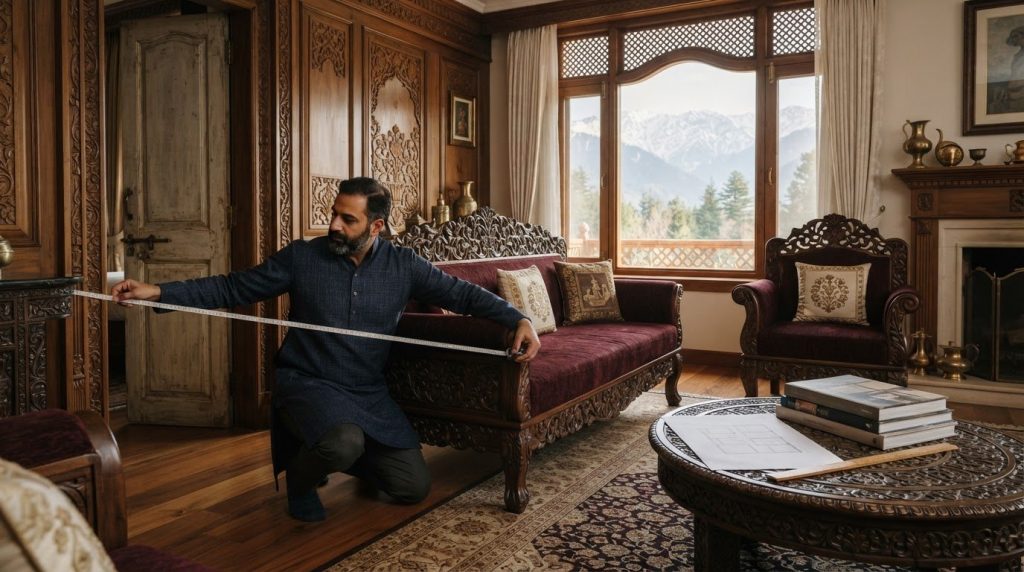
What if furniture that looks perfect in a showroom won’t fit through your doorway or work in your room? Avoiding common furniture buying mistakes starts with checking fit and function before appearance. Colour and shape matter, but dimensions, comfort, construction and care needs matter just as much.
Before choosing a piece, measure the room, access route and intended layout. Then consider how you’ll use it, who will use it and what materials suit its location and your routine. Compare written product details rather than relying on photos or broad material labels. Checking size, construction and maintenance requirements helps you make a more informed choice.
This guide offers a practical fit-and-function checklist to help you select furniture that suits your space and its intended use. You’ll learn what to compare across materials and construction, how to account for indoor or outdoor conditions, and what to settle before choosing ready-made or custom-made furniture. A few checks before buying can help prevent costly mismatches later.
Key Takeaways
- Start with room measurements and the full access route to reduce the risk of a piece not fitting.
- Match furniture to how often and where it will be used, then weigh comfort, construction and care needs.
- Compare complete product specifications, including dimensions, materials and maintenance, rather than relying on photos or broad labels.
- Use this fit-and-function checklist for avoiding common furniture buying mistakes before making a final selection.
- Consider ready-made options for standard needs and custom-made furniture when dimensions or function call for a tailored fit.
Avoiding furniture buying mistakes starts with measuring the space and defining its use
A piece can look right in a photograph or showroom and still be a poor fit at home. Choosing by appearance before checking dimensions can leave too little room to walk, open doors or use the furniture comfortably. Avoiding common furniture buying mistakes means looking beyond the product’s listed length, width and height to how it will fit in the room.
Those dimensions describe the piece itself. Usable space also includes room to move past a sofa, pull out a chair, open a cupboard or reach a bed. A broad overview of furniture’s forms and materials is available from Furniture, but for a buying decision, start with your room and the route into it.
Which measurements should you take before buying furniture?
Measure the room’s length, width and ceiling height, then note fixed features such as doors, windows, radiators and built-in storage. Check which way doors swing and where people need to walk. Also measure the narrowest points along the route into the room, including the entrance, corridor, stairwell and lift, if there is one. A piece may suit the room but still be difficult to bring inside.
Before comparing options, mark the planned footprint on the floor with removable tape or paper. This makes the piece’s scale easier to judge and helps reveal whether it blocks a walkway or conflicts with another item. Before shopping, record the room’s length, width and height, fixed features, access-route dimensions, and the floor footprint and clearance needed for the furniture.
Homes across Jammu and Kashmir vary in layout, so don’t assume that room sizes or access points are standard. Measure the actual space, whether you’re furnishing a home or a commercial setting.
How should furniture suit the room’s everyday purpose?
Start with the people who will use the piece, how often they’ll use it and what they’ll do with it. Seating used daily has different comfort requirements from occasional seating. A work area needs a surface and storage suited to its tasks, while a storage piece should suit both the items it needs to hold and the space where it will stand.
Define these needs before weighing decorative details. For indoor furniture, consider how the piece will function in the room and fit into the household’s routine. The premium indoor furniture guide for Jammu and Kashmir homes offers related ideas for selecting pieces for residential spaces. A clear purpose, paired with accurate measurements, gives you a reliable basis for comparing options.
Choose furniture for daily function, comfort, and maintenance, not appearance alone
A striking finish can catch your eye, but the piece still needs to work for the people who use it. A sofa used every day calls for different comfort and care considerations than occasional seating. A dining table used for meals, study and work needs to support those routines, not just match the room. Avoiding common furniture buying mistakes means weighing regular use alongside appearance.
Consider how often the furniture will be used, who will use it and what upkeep fits your routine. Practicality, style and proportion all inform a balanced selection, as outlined in these guidelines to furniture selection. Apply those ideas to the specific piece rather than relying on a broad material label.
How can you compare furniture materials and construction?
Solid wood, engineered wood, metal and upholstery have different characteristics. Compare the product’s stated material, finish and care instructions with its intended use. For example, consider whether a surface suits the way you’ll use and clean it, and whether upholstered seating fits your household’s care routine. The material name alone doesn’t tell you how the finished furniture is built or maintained.
Where the design allows, inspect joints, support, seams, finish and moving parts. Look for even seams, stable support and parts that move smoothly. Compare these details across the complete product rather than assuming that one material is always stronger or easier to care for. The construction and finish of a particular piece can affect how it performs.
The right material depends on use, care habits and placement. Keep this in mind for both indoor and outdoor furniture, since the setting affects which surfaces and upkeep make sense.
What comfort and maintenance checks prevent buyer’s remorse?
If you can test a seat, sit in your usual posture. Notice whether the seat depth supports you, the backrest feels suitable and getting up is comfortable. Consider who else will use it, since a piece that feels comfortable to one person may not suit everyone. For desks or tables, think through the tasks and the seating that will be paired with them.
Next, assess care. Check how the upholstery or finish should be cleaned and whether that routine fits your household. Think about exposure to sunlight or moisture in the intended location, especially for furniture placed near windows or outdoors. For outdoor options, see this weather-resistant outdoor furniture guide for India.
For residential or commercial spaces, match the material, construction and care requirements to the expected use. If a ready-made size or function doesn’t suit the room, consider custom-made furniture for a tailored fit.
Compare furniture options by total fit, specifications, and customisation needs
Once you know what a piece needs to do, compare shortlisted options against the same criteria. Photos can show shape and colour, but they don’t establish whether dimensions, materials, care needs or included components suit your room and routine. A consistent comparison makes avoiding common furniture buying mistakes more practical.
Use a simple shortlist and record these details for each option:
- Fit: Does its footprint suit the planned position and leave enough usable space around it?
- Intended use: Does its design support the activity and frequency of use?
- Materials and construction: What materials, finish, support and construction details are stated?
- Care: Does the maintenance routine suit the furniture’s location and your habits?
- Dimensions: Are the full measurements clear, and do they match your room and access route?
- Customisation: Can a ready-made option meet the defined requirements, or is a tailored size or function needed?
Compare complete specifications, not broad labels such as “wood” or “compact.” Two pieces described in similar terms may differ in dimensions, finish, construction or included components. Note each specification that affects fit or use, and compare like with like. A photograph is a useful visual reference, not a substitute for measurements and product details.
When does ready-made furniture make sense?
Ready-made furniture is a practical choice when its dimensions, function and style already suit the space. Compare the exact measurements and stated components of each shortlisted item. Don’t let a prominent display or the apparent convenience of one option replace that comparison. If it fits your room and routine without compromises that matter to you, a standard option may be the straightforward choice.
When should you consider custom-made furniture?
Custom-made furniture is worth considering when standard dimensions don’t meet a specific room, storage or use requirement. Define the need first by recording the required measurements, materials, finish and function. For example, a narrow area or a particular storage need may call for dimensions that standard options don’t address.
A genuine customisation need solves a defined fit or function problem; novelty alone doesn’t require a custom piece. This keeps the decision focused on practical requirements. For more context, read the custom-made furniture guide for India.
Use the same comparison criteria for indoor and outdoor furniture, while accounting for where each piece will be placed and how it will be used. The right choice is the one whose full specifications align with the room, routine and care expectations, whether ready-made or tailored.
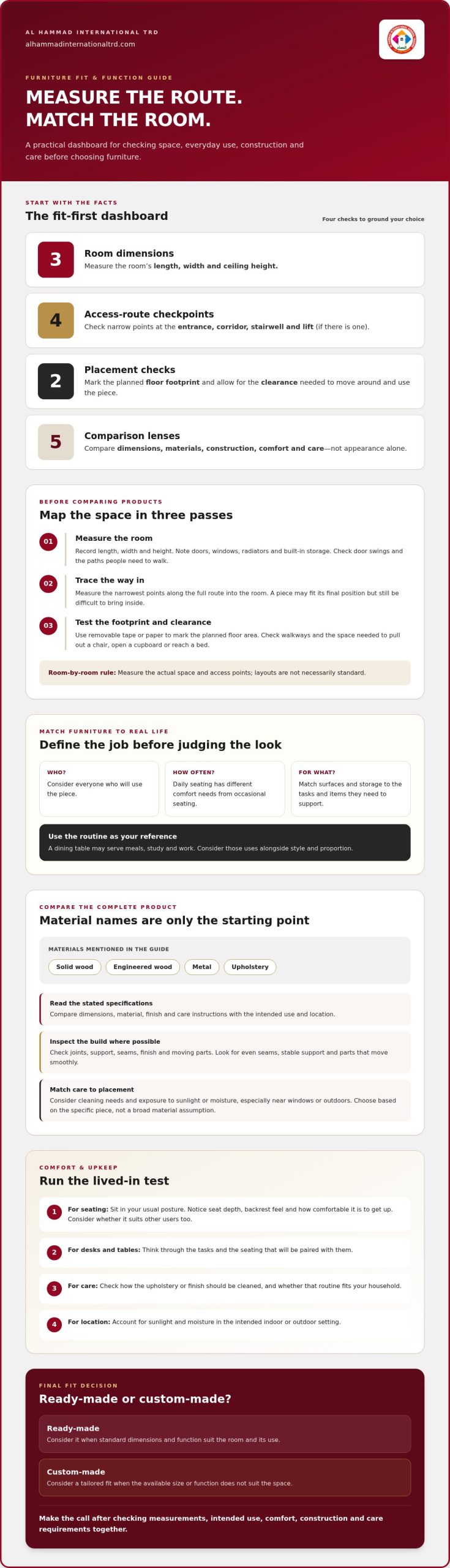
Furniture buying checklist: Avoid common mistakes
Use this checklist before selecting a piece. It brings measurements, day-to-day needs and product details together, so you can judge how the furniture will work in your actual space.
- Confirm room fit: Compare the furniture’s dimensions with the intended position and leave enough usable space for movement and access.
- Check the access route: Measure entrances, corridors, stairwells, lifts and narrow turns between the delivery point and the room.
- Define the use: Match the piece to its users, activities and expected frequency of use.
- Review construction: Consider the stated materials, support, joints, finish, seams and moving parts where relevant.
- Assess care: Make sure the cleaning and maintenance needs suit your routine and the planned location.
- Compare full specifications: Review written dimensions, materials, finish and included components for the exact option or configuration.
- Plan placement: Decide where the piece will go and whether indoor or outdoor exposure affects its care requirements.
For buyers in Jammu and Kashmir, assess the property’s actual access rather than assuming every entrance or layout is alike. Consider how seasonal conditions may affect the intended placement, particularly for outdoor furniture, and choose with the location’s exposure and care needs in mind.
What should you verify in the product details?
Keep the specifications for each shortlisted option together. Match listed measurements and material descriptions against your recorded requirements, then review the finish and included components. Product photographs may show a particular configuration, so check that the written details describe the option you’re comparing. This makes differences between pieces easier to spot and reduces reliance on appearance alone.
How can you plan delivery and placement in Jammu and Kashmir?
Trace the full route from the entrance to the final room, noting narrow turns or restricted doorways as well as corridor, stairwell or lift dimensions. Decide where the furniture will go before purchase, then consider whether sunlight, moisture or outdoor exposure affects its care routine. These checks connect the piece’s specifications to the practical conditions of the property.
Use the completed checklist to narrow your choice, then explore furniture options for your space.
Make a confident furniture choice with ready-made and custom-made options
A confident choice follows a clear sequence: measure the room, match the furniture to its use, compare full specifications and plan its placement. This keeps the decision grounded in practical needs, rather than letting appearance alone set the direction. It’s a useful final check for anyone focused on avoiding common furniture buying mistakes.
Which furniture option best matches your needs?
Choose indoor furniture by considering the room’s purpose, available dimensions and the care routine that suits your household or workplace. For outdoor furniture, factor in its exact placement, exposure to sunlight or moisture and the maintenance that location calls for. A piece intended for a covered area may face different conditions from one placed in the open, so assess the actual setting.
Ready-made furniture can suit your needs when its measurements, function and specifications align with the space. Custom-made furniture is worth considering when defined dimensions, storage requirements or a particular use call for a tailored piece. Choose based on your requirements, including comfort, care and construction.
What should you do before finalising your shortlist?
Review the measurements and written specifications for each remaining option. Compare dimensions, materials, finish, construction and included components using the same criteria, so differences are clear. Then picture the item in its intended position. Check that the planned layout still works and that the care routine makes sense for its location.
In Jammu and Kashmir, base your decision on the property’s actual layout and the conditions where the furniture will be used. Recheck access and placement as part of the final review, especially if the piece is large or intended for an outdoor area. A shortlist that meets these checks is more useful than one based only on a preferred look.
Al Hammad International trd offers indoor and outdoor furniture, along with custom-made options for residential and commercial environments. Browse by the space and function you have in mind, then compare choices against your measurements and priorities. Explore furniture and custom-made options.
Choose furniture with confidence
A well-chosen piece should fit the room, support its everyday purpose and suit the care you can provide. Before deciding, compare written dimensions, materials, finish and construction, then picture the furniture in its planned position. These practical checks make avoiding common furniture buying mistakes easier and help you assess options beyond appearance alone.
Ready-made furniture can work well when its specifications match your space and routine. If defined dimensions or functional needs call for a tailored fit, custom-made furniture is another option. Al Hammad International trd offers indoor and outdoor furniture for residential and commercial environments, alongside custom-made furniture.
Use your checklist to narrow the choices, confirm the intended placement and choose the option that meets your needs. Explore furniture and custom-made options for your space. With fit and function guiding the decision, you can move forward with confidence.
Frequently Asked Questions
Is it a mistake to buy furniture online without seeing it in person?
No, buying furniture online isn’t automatically a mistake, but relying on photographs alone can lead to a mismatch. Review the written dimensions, material description, finish and included components. Compare these details with your room measurements and how you plan to use the piece. Also consider whether it can pass through the access route and reach its final position. The same checklist helps you assess options online or in person.
How do I know if furniture will fit through my doorway?
Measure the doorway’s clear width and height, then compare them with the furniture’s dimensions and any information about separate or removable parts. Measure the entire route, including corridors, stairways, lifts and tight turns. A piece that fits the room may still be difficult to move into it. Check the route measurements before buying, and plan the furniture’s final position so you can assess both access and placement.
What should I check when buying a sofa?
Start with the room and access measurements, then consider who will use the sofa and how they prefer to sit. Assess seat depth, back support and ease of getting up, and test it if you can. Review the product details for upholstery, frame construction, finish and care instructions. For a sofa used every day, comfort and maintenance deserve close attention. Choose one that suits your household routine, not just its appearance in a photograph.
Is custom-made furniture better than ready-made furniture?
Neither option is always better. Ready-made furniture can suit your needs if its dimensions, function and style work in the space. Custom-made furniture may be useful when a specific room measurement, storage requirement or intended use calls for a tailored solution. Define those needs before comparing options. Review materials, finish, construction and care requirements alongside fit, so your choice addresses a practical requirement rather than customisation for its own sake.
How can I tell whether furniture is durable?
No material label alone guarantees durability. Consider how often the piece will be used, then review its construction, finish and care instructions. Look at joints and supports where visible; for upholstered furniture, assess seams and support as well as the stated fabric. Compare the full specifications with the demands of your room and household. Avoid relying only on appearance or broad quality descriptions when deciding whether a piece suits regular use.
What furniture-buying mistakes should I avoid in Jammu and Kashmir?
For avoiding common furniture buying mistakes in Jammu and Kashmir, measure both the room and the route into it rather than assuming a standard layout. Match the piece to its everyday purpose, and consider its placement and maintenance needs. For outdoor furniture, assess the actual exposure at your property and choose a care routine that fits those conditions. Before finalising a selection, compare the written dimensions, materials, finish and included components with your requirements.
Should I choose furniture based on current trends?
Use trends for inspiration, not as the main decision rule. First confirm that the furniture fits the room, supports its intended use and meets your comfort and maintenance needs. Then consider whether its design works with the rest of the space and your preferences. This order keeps a short-term style choice from outweighing practical details you’ll rely on regularly. A well-considered piece should suit both the room and the way you use it.