
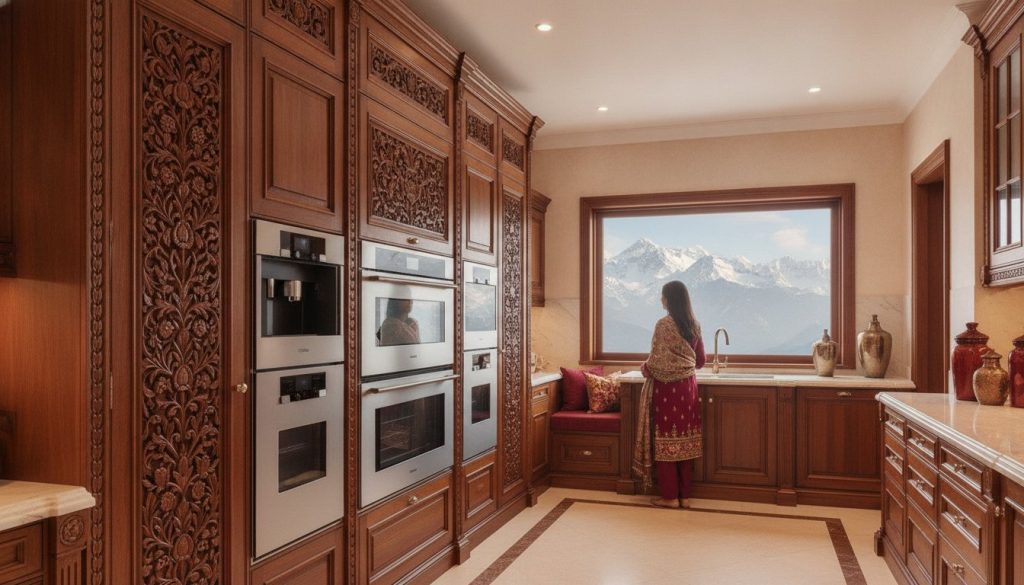
What if the most expensive mistake in your kitchen renovation isn’t the cabinetry or the stone, but the technical oversight that causes a brand-new refrigerator to overheat? Successfully integrating appliances in custom kitchen furniture India requires a hardware-first approach to avoid common fitment and ventilation issues. Many homeowners focus on aesthetic finishes, only to find that their high-end appliances lack the necessary airflow once the furniture is installed. This oversight often leads to mechanical failure and costly structural modifications.
You likely agree that a kitchen should be as functional as it is beautiful. It’s frustrating to invest in bespoke furniture only to discover that your oven doesn’t sit flush or your dishwasher vibrates against the cabinets. This guide promises to help you master the technical and aesthetic secrets of seamless integration. You’ll learn how to ensure durability, safety, and modern style while protecting your appliance investment.
We’ll preview the essential 2026 BIS safety standards, storage efficiency techniques, and material choices designed to withstand the unique climate of Jammu and Kashmir. From managing voltage differences for imported units to selecting durable bespoke wood, this article provides the roadmap for a high-performing kitchen. We’ll cover everything from ventilation gaps to precise measurement strategies for a sleek, organized layout.
Key Takeaways
- Understand why bespoke furniture offers superior alignment and space optimization compared to standard modular units in Indian kitchens.
- Master the technical requirements for integrating appliances in custom kitchen furniture India, including essential ventilation paths and cabinet reinforcement.
- Evaluate the differences between built-in and freestanding units to choose the most efficient layout for your cooking and storage needs.
- Learn how to select moisture-resistant materials and electrical safeguards specifically designed for the Jammu and Kashmir climate.
- Stay informed on the 2026 BIS certification standards to ensure your kitchen appliances comply with new Indian safety and quality regulations.
The Rise of Integrated Kitchens: Why Custom Furniture Beats Modular in India
Integrated kitchens represent a shift from traditional cooking spaces to streamlined hubs where appliances and cabinetry align perfectly. Unlike modular systems that rely on pre-set box sizes, custom manufacturing allows for total control over every dimension. This precision is vital when integrating appliances in custom kitchen furniture India, as standard modular gaps often collect debris or disrupt the visual flow. In the Indian context, where kitchen layouts are frequently non-linear, the ability to adjust a cabinet frame by millimeters makes the difference between a sleek install and a forced fit. The history of kitchen design shows that as technology evolved, the need for a unified workspace became paramount. Today, bespoke furniture ensures that refrigerators, ovens, and dishwashers sit flush with the surrounding woodwork for a premium finish.
Customization Beyond the Standard Grid
Residences in Jammu and Kashmir often feature unique architectural details, such as varied ceiling heights or non-standard wall offsets. Modular kitchens typically struggle with these irregularities, forcing the use of filler panels that waste valuable storage. Custom furniture solves this by adapting to the specific footprint of your room. It allows you to design around existing plumbing and gas lines without compromising the overall style. You can select materials that complement local indoor furniture trends, such as seasoned hardwoods that handle regional humidity levels better than standard particle board. This tailored approach ensures the kitchen feels like a natural extension of the home rather than a pre-fabricated addition.
The ‘Built-in’ Aesthetic vs. Freestanding
A primary benefit of custom work is visual continuity. You can match cabinet finishes with appliance panels to create a hidden look where the refrigerator or dishwasher disappears into the cabinetry. This approach optimizes space by reclaiming the inches typically lost in modular gaps. Freestanding units can also be housed in custom-built niches to mimic the built-in look while maintaining the flexibility to upgrade the appliance later. Ergonomics also improve with bespoke designs. You can set heavy appliances, like built-in ovens or microwaves, at eye level to reduce physical strain during daily use. This level of technical detail is a significant factor in increasing property value. A kitchen that combines durability with precise engineering becomes a permanent asset for any residence. Integrating appliances in custom kitchen furniture India isn’t just about aesthetics; it’s about creating a workspace that is both functional and resilient.
Technical Requirements: Ventilation, Support, and Power for Custom Cabinetry
Technical precision determines whether a kitchen lasts or requires constant repair. Integrating appliances in custom kitchen furniture India demands more than just measuring an oven’s width. You must account for the thermal and structural impact of housing high-powered machinery inside solid wood or plywood structures. While manufacturers provide basic clearance specs, these often assume free-standing environments. Heavy custom cabinetry retains heat differently, making engineered air paths a necessity rather than an option.
Engineering the Airflow
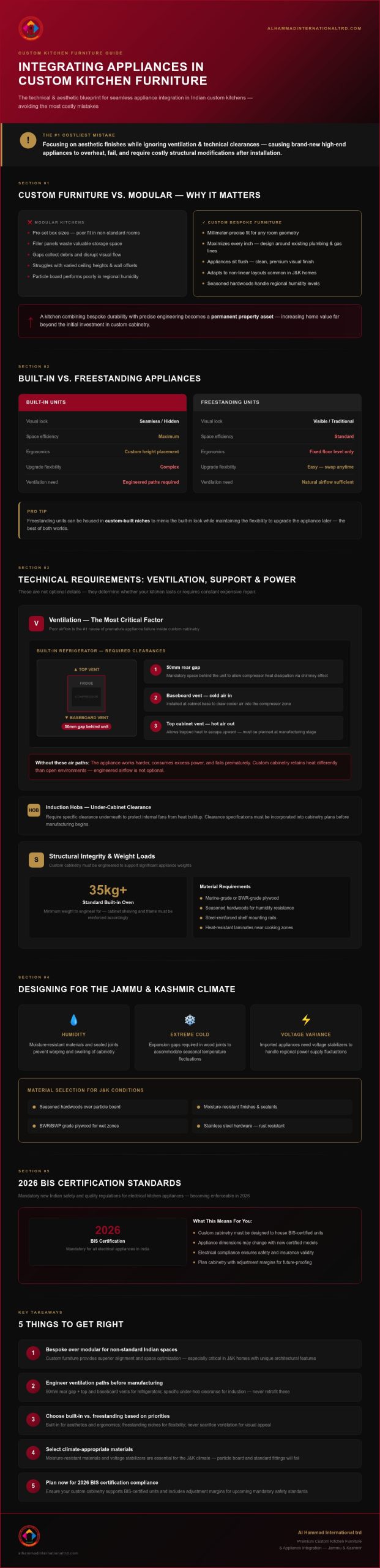
Ventilation is the most critical technical factor for appliance longevity. Most built-in refrigerators require a chimney effect to dissipate heat from the compressor. This involves leaving a 50mm gap behind the unit and installing vents in the cabinetry baseboard and top. Without these air paths, the appliance works harder and consumes more power. It eventually fails. Induction hobs also require specific clearance underneath to protect internal fans. As the 2026 BIS certification standards become mandatory for electrical appliances, ensuring your custom cabinetry supports these certified units is vital for safety and compliance. Designing these paths into the furniture at the manufacturing stage prevents unsightly modifications later.
Structural Integrity and Material Choice
Custom cabinetry must handle significant weight. A standard built-in oven often weighs 35kg or more. When stacking a microwave and oven, horizontal shelving needs reinforcement with thicker plywood or internal support brackets to prevent sagging. Heat-resistant linings are also essential. High-temperature ovens can cause wood to dry out if the cabinet interior isn’t shielded. Using seasoned hardwoods or high-grade marine ply ensures the structure remains stable despite temperature fluctuations. These materials offer the density required to hold heavy hinges and drawer slides without stripping over time.
Power sockets should not be placed directly behind the appliance. This keeps the unit from sitting flush and makes it impossible to unplug the machine easily. Place sockets in the back of an adjacent cupboard instead. Moisture-resistant coatings are also necessary for cabinets housing refrigerators to protect the wood from condensation. If you are planning a renovation, choosing a provider that understands these bespoke manufacturing requirements is essential for long-term durability. Proper planning ensures that your appliances and furniture function as a single, reliable system.
Built-in vs. Freestanding: Which Appliances Suit Custom Furniture?
Choosing between built-in and freestanding units is a fundamental decision in modern kitchen planning. Built-in appliances offer a seamless, “invisible” look. They’re engineered to reside behind cabinet-front panels. Freestanding units provide more flexibility and are generally easier to move or replace. Successfully integrating appliances in custom kitchen furniture India depends on balancing these styles with your specific layout and budget. While built-in models offer a premium feel, freestanding units can still achieve a high-end look when housed in professionally designed niches.
The Built-in Advantage
Built-in units create a flush finish that eliminates gaps where dust and grease accumulate. This is particularly effective for hobs, ovens, and dishwashers. Integrated refrigerators are a luxury statement. They use custom panels that match the rest of your indoor furniture. This ensures the appliance doesn’t disrupt the visual flow of the room. Most high-end brands follow standard dimensions for these units. This standardization makes future replacements simpler. It’s also important to verify that any new unit meets the 2026 BIS certification standards for safety and quality in the Indian market before finalizing your cabinet dimensions.
Integrating Freestanding Units
Many Indian households prefer large American-style refrigerators or specific freestanding ranges. These can be integrated by designing custom “pockets” within the cabinetry. These niches allow the appliance to sit deep enough to appear built-in. It’s vital to manage the clearance gaps carefully. You need enough space for heat dissipation and routine cleaning. We often use custom-made furniture trim to bridge the visual gap between the appliance and the wood. This technique provides a cohesive aesthetic without the higher cost of fully integrated models.
Maintenance accessibility is a priority. Appliances will eventually require service or replacement. Your custom furniture must allow for easy removal. We ensure that power cables and water lines have enough slack to pull the unit out safely. This prevents damage to your bespoke woodwork during technical visits. While built-in units require a higher initial investment, they provide significant long-term aesthetic value. They create a kitchen that feels larger, more organized, and permanently tailored to your residence.
Designing for the Jammu and Kashmir Climate: Durability and Care
Integrating appliances in custom kitchen furniture India requires localized engineering to handle the specific environmental stressors of Jammu and Kashmir. From the freezing winters to the humid monsoon months, temperature extremes can cause standard cabinetry to expand or contract. When you place a heat-generating appliance inside a wooden frame, this thermal stress is amplified. Proper planning ensures that the furniture remains stable while protecting the sensitive electronics of modern appliances. We focus on building systems that account for these shifts without compromising the kitchen’s aesthetic or mechanical performance.
Climate-Resilient Material Choices
High-quality indoor furniture in J&K must be constructed from properly seasoned wood to prevent warping. We prioritize moisture-resistant finishes, especially for zones near refrigerators and under-sink areas where condensation is common. These zones are prone to significant moisture buildup during temperature shifts between seasons. Using marine-grade plywood or treated hardwoods ensures the cabinetry won’t swell or delaminate when exposed to high humidity. It’s also essential to use heat-resistant barriers between built-in ovens and wood panels to maintain structural integrity over many years of use. This prevents the wood from drying out or cracking due to repeated exposure to high temperatures.
Local Infrastructure Considerations
Local grid stability is a significant concern for expensive kitchen tech. Integrating appliances in custom kitchen furniture India means designing dedicated compartments for voltage stabilizers and surge protectors. This keeps the protective hardware hidden but accessible for maintenance. We also design specific layouts for gas cylinder storage, ensuring proper ventilation and safety shut-off access according to local safety norms. If your home uses a backup inverter system, we plan the kitchen wiring to prioritize essential appliances like refrigerators and chimneys during power outages. This level of technical integration prevents the “cluttered” look of external wires and bulky stabilizers sitting on countertops.
Designing for J&K also means accounting for local pests and maintenance needs. We utilize “ant-proof” design principles, such as using silicon-sealed baseboards and minimizing hidden crevices where debris can collect. Easy-to-clean surfaces and removable toe-kicks are vital for maintaining hygiene in a busy kitchen. If you need a kitchen that withstands the regional climate while maintaining a premium look, you can explore our custom-made furniture solutions tailored for J&K residences. Our approach combines durability with the specific technical needs of modern appliances to ensure your investment lasts.
The Al Hammad Advantage: Seamless Custom Furniture and Appliance Solutions
Mismatched specifications between furniture makers and appliance retailers often lead to costly delays. Integrating appliances in custom kitchen furniture India requires a coordinated approach where the cabinetry is engineered specifically for the hardware it houses. At Al Hammad International trd, we eliminate the gap between these two industries. By offering both bespoke manufacturing and a curated selection of appliances in Jammu and Kashmir, we ensure a perfect fit before the first piece of wood is cut. This one-stop-shop model prevents the common frustration of appliances not fitting after cabinets are already made.
Our Integration Process
We follow a methodical three-step approach to ensure technical accuracy and aesthetic continuity. This process prioritizes reliability and long-term performance for every kitchen project.
- Step 1: Appliance Selection. You choose from our curated range of appliances available in-store. This allows us to work with verified physical dimensions and technical manuals from the start.
- Step 2: Technical Design. Our manufacturing team creates furniture designs based on the exact specs of your chosen units. We plan for the ventilation gaps, weight-bearing supports, and power access points discussed in previous sections.
- Step 3: Bespoke Manufacturing. We build the furniture in our local facilities, specifically tailored for your Jammu and Kashmir home. This ensures the materials used can withstand the regional climate while housing your technology securely.
Beyond the Kitchen
A modern home often features open-plan layouts where the kitchen is visible from the dining and living areas. We ensure your new cabinetry matches the style and finish of your luxury indoor furniture. This creates a unified aesthetic across your entire residence. Whether you prefer the warmth of seasoned hardwood or the sleek lines of modern laminates, our furniture collections provide a consistent look throughout the home. This level of detail is a hallmark of our work in the region.
Our expertise in custom made furniture in India allows us to solve complex layout problems that standard modular systems cannot. We don’t just provide storage; we build functional systems that protect your appliance investment. By managing both the furniture and the appliances, we provide a dependable solution that emphasizes durability and modern style. Every inch is tailored to your specific needs, ensuring a kitchen that is organized, efficient, and built to last.
Building a Reliable and Modern Kitchen Asset
Mastering the technical requirements of ventilation and weight-bearing support ensures your kitchen remains a functional investment for years. By choosing bespoke manufacturing over standard modular units, you gain the ability to adapt to regional climate demands while maintaining a flush, premium look. This approach protects your appliances from overheating and ensures your cabinetry remains structurally sound despite the temperature shifts common in Jammu and Kashmir. Proper material selection and engineered air paths are the foundation of a workspace that performs as well as it looks.
Successfully integrating appliances in custom kitchen furniture India requires a technical mindset that prioritizes long-term mechanical health alongside your aesthetic goals. As a specialized provider of custom-made furniture in Jammu and Kashmir, we offer the expertise needed to bridge the gap between appliance retail and bespoke manufacturing. Our curated selection of premium home appliances is available in-store to help you plan with precision from day one. It’s time to build a kitchen that reflects your style without compromising on reliability.
Visit Al Hammad International to browse our appliances and start your custom kitchen journey today. Your ideal kitchen is within reach when you combine technical accuracy with high-quality local craftsmanship.
Frequently Asked Questions
Can I use my existing appliances in new custom kitchen furniture?
Yes, you can use existing units, but you must provide exact dimensions and technical manuals before manufacturing begins. Integrating appliances in custom kitchen furniture India requires precise cabinet sizing to accommodate older models that may not follow modern standard dimensions. We measure your current units to ensure a flush fit. If your appliances are nearing the end of their lifespan, upgrading to newer, BIS-certified models during the design phase is often more efficient.
What is the standard depth for custom kitchen cabinets in India?
The standard depth for base cabinets is typically 600mm. This allows most standard appliances to sit flush with the cabinetry. Wall cabinets are usually shallower, around 300mm to 350mm, to provide head clearance. For custom kitchens in Jammu and Kashmir, we can adjust these depths to accommodate non-standard wall offsets or specific large-format appliances. This ensures the overall layout remains ergonomic and functional while maximizing the available floor space in your residence.
How do I ensure proper ventilation for a built-in refrigerator?
Effective ventilation requires a clear path for heat to escape. You should include a 50mm air gap behind the unit and install ventilation grilles in the baseboard and the top of the cabinet. This creates a chimney effect that draws cool air in from the bottom and exhausts hot air from the top. Without this airflow, the compressor will overheat and fail prematurely. Proper planning during the manufacturing stage ensures these vents are aesthetically integrated into the furniture.
Which wood is best for custom kitchen cabinets in Jammu and Kashmir?
Seasoned hardwoods or high-grade marine-quality plywood are the best choices for the J&K climate. These materials resist the warping and swelling caused by regional humidity shifts and extreme winter temperatures. We recommend using moisture-resistant finishes to protect the wood from condensation near refrigerators and sinks. Durable hardwoods provide the structural integrity needed to support heavy built-in ovens and microwaves without sagging or stripping hinges over time. This ensures your indoor furniture remains stable for years.
Is it better to buy appliances before or after designing custom furniture?
It is always better to select your appliances first. Integrating appliances in custom kitchen furniture India is a hardware-first process. Having the exact model specifications allows our manufacturing team to build cabinetry with millimeter precision. Buying appliances after the furniture is made often leads to fitting errors or insufficient ventilation gaps. Selecting from a curated range of appliances in-store ensures that the furniture design perfectly matches the technical requirements and power needs of each unit.
How do I handle appliance repairs if they are built into the furniture?
Built-in appliances are designed to be removable for maintenance. We ensure that power cords and water lines have sufficient slack to allow the unit to be pulled out of its niche. While Al Hammad International trd does not provide repair services, we manufacture the cabinetry to standard accessibility norms. This ensures that third-party technicians can safely remove and service your appliances without damaging the surrounding bespoke woodwork or custom-made furniture panels during the technical visit.
What are the power requirements for a modern integrated kitchen in J&K?
A modern kitchen requires dedicated circuits for heavy appliances like ovens, refrigerators, and hobs. In J&K, managing voltage fluctuations is critical. We recommend integrating surge protectors and stabilizers into hidden but accessible cabinet compartments. Ensure your layout includes 15-amp sockets for heating appliances and 5-amp sockets for smaller gadgets. Planning for an inverter-compatible circuit during the furniture design phase ensures essential appliances, such as the refrigerator and chimney, remain functional during local power outages.