
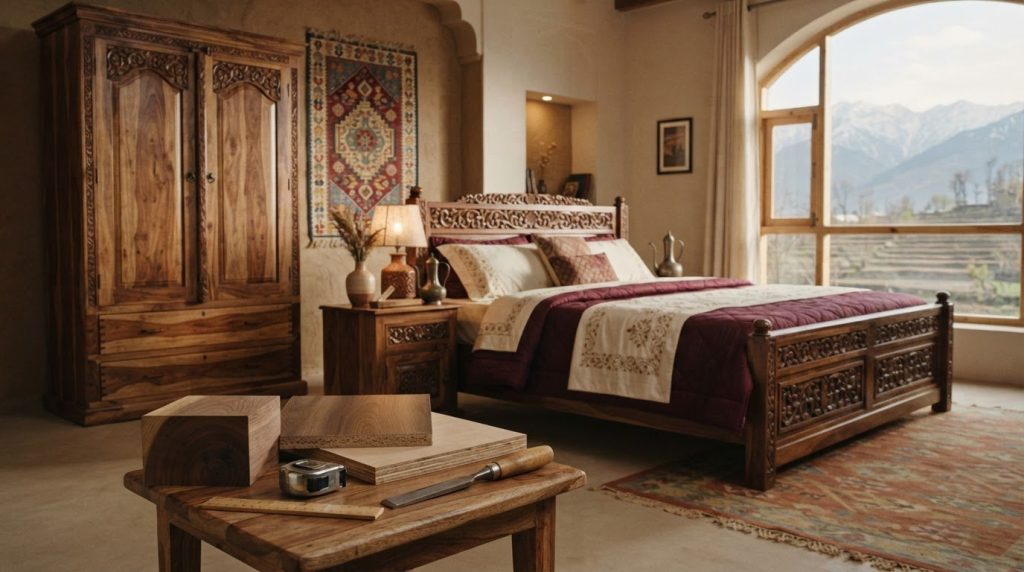
What if furniture that looks substantial isn’t made entirely from solid wood? For anyone searching “solid wood furniture Jammu,” that distinction matters. A solid-wood frame, engineered-wood panels and a wood-veneer finish can look similar in product photos, but they’re different constructions with different care needs.
Choosing furniture for a home in Jammu means looking beyond the material label. Construction, finish, room size and daily use all affect whether a piece suits your needs. Start by deciding what the furniture must do, then compare its dimensions and component details with your space and routine.
This guide explains what solid wood means, how it compares with engineered wood and veneer, and what to look for when assessing furniture descriptions and build quality. It also covers practical considerations for placing and caring for furniture in Jammu, plus how to choose between ready-made indoor furniture and a custom-made piece designed around your room’s dimensions or requirements.
Key Takeaways
- Learn how solid timber, veneer and engineered wood differ, so you can compare furniture construction without assuming one option suits every home.
- Use the material and construction details to assess whether a piece fits its intended use and care needs.
- When comparing solid wood furniture Jammu options, look beyond product photos and review dimensions, finish, joints, stability and hardware.
- Choose between ready-made and custom-made furniture by considering your room’s measurements and how you’ll use the piece.
- Custom-made furniture tailored to your design requirements can help address specific dimensions or functional needs.
What Does Solid Wood Furniture Mean for Buyers in Jammu?
“Solid wood” describes the material used in a furniture component. It doesn’t guarantee that every part of the piece is made from the same material. A table may have solid timber legs and a differently constructed top; a wardrobe may combine a timber frame with panels made another way. Look for a description that identifies the material used in each part.
Quick definition: Solid wood furniture uses solid timber for the specified components; veneer is a thin layer of real wood applied over a core; engineered wood is made by bonding wood fibres, particles or layers into a panel. These are different construction choices, not a simple ranking from best to worst.
Solid wood, veneer, and engineered wood: what is the difference?
With solid wood, a component is made from timber rather than a panel with a separate wood surface. Veneer has a real-wood surface, but its core may be engineered wood or another material. Engineered wood panels are manufactured by joining wood-based fibres, particles or layers. The exact structure varies, so check the description for each part: frame, shelves, doors, top and back panel may not share the same construction.
A veneer finish can provide a natural wood appearance while using a different core. That doesn’t automatically make it unsuitable; intended use and overall build matter. Likewise, the words “solid wood” alone don’t establish joint quality, expected lifespan or care requirements. Compare the specified construction with how the piece will be used.
Which solid wood furniture details matter in a Jammu home?
Start with the room and the job the furniture needs to do. A dining table used daily has different functional demands from a display unit. A bedroom wardrobe needs a layout that works for your storage and leaves enough floor space. Household routines matter too: frequent use, children, pets and cleaning habits can all influence which surfaces and designs are practical.
Next, consider where the piece will sit and the conditions in that room. Homes in Jammu don’t all have the same sunlight, ventilation or exposure to temperature and moisture changes. Wood and finishes can respond differently depending on the material and construction, so don’t assume one care routine suits every piece. Ask what finish is used and follow guidance for that finish. This overview of wood finishing techniques explains how finishes affect a wood surface’s appearance and protection.
Separate appearance from practical requirements. You may prefer visible wood grain, but also check that the dimensions allow comfortable movement, shelves or drawers provide the storage you need, and the surface is straightforward to clean. For solid wood furniture Jammu buyers, a clear component-by-component description is a more useful starting point than a material label or product photograph alone.
How Wood Species and Construction Affect Solid Wood Furniture
A species name can help describe a piece, but it doesn’t tell you how every part is made or how the finished furniture will perform. Timber appearance varies with the wood, cut and finish, while construction details such as joints, panel thickness and assembly affect stability and everyday use. Treat the material name as one part of the product description, not a quality rating.
How to compare sheesham, teak, mango, and other wood descriptions
Sheesham, teak and mango appear in Indian furniture material descriptions. Deodar, Kail, Chir and Fir are also timber species associated with Jammu and Kashmir. Colour and grain can vary, so examine the specific piece or a representative sample where possible. Ask for the stated species and finish, then compare those details with the furniture’s intended use.
Use the material description to guide questions about construction and placement, rather than assuming a particular species is automatically right for a specific use. A wood name doesn’t tell you whether the shelves, back, frame and other components are made from the same material.
| Species or description | Typical appearance | Use and care considerations |
|---|---|---|
| Sheesham | Colour and grain can vary between pieces and finishes. | Review the construction of each component and follow care guidance for its finish. |
| Teak | Appearance depends on the timber and surface finish. | Judge suitability by the item’s build and intended placement, not the name alone. |
| Mango | Check the specific piece, since appearance can vary. | Compare the product description with the furniture’s purpose and care requirements. |
| Deodar, Kail, Chir or Fir | Review the species and finish details for the specific item. | Assess the complete construction and use the care instructions for that piece. |
Why construction details matter as much as the wood name
A wood label alone doesn’t prove the overall build quality of a furniture piece. Look beyond visible surfaces. Check whether the description identifies the material used for the frame, panels, back, shelves and drawer components. Compare component thickness where that information is provided, and inspect joints for a close, even fit. The assembled piece should sit steadily, with doors and drawers operating as intended.
Finish affects the surface’s appearance and routine cleaning. A smooth, even finish may look different from one that highlights more visible grain; cleaning instructions should suit the specific finish. Don’t assume all wood furniture can be cared for in the same way.
For solid wood furniture Jammu shoppers, comparing the species, component construction and intended use gives a clearer basis for choosing than relying on a material name alone. If room dimensions or functional requirements call for a tailored option, explore custom-made furniture options designed around customer requirements.
Solid Wood Furniture vs Other Options: What Suits Your Needs?
The right construction depends on how a piece will be used, the appearance you prefer, the room’s requirements and your budget. Solid wood, veneer and engineered options can all suit a home when their construction matches the job. Compare the specific item rather than assuming one category is always stronger, longer-lasting or better value.
| Construction | Appearance | Useful for | Care and budget considerations |
|---|---|---|---|
| Solid wood | Shows the character of the timber and its finish. | Pieces where you want visible natural wood and the specific build suits the intended use. | Follow care guidance for the finish. Compare the full construction and total budget for the piece. |
| Veneer | A real-wood surface over a different core. | Furniture where a wood surface is preferred and the core construction fits its purpose. | Care depends on the surface finish and core. Review both, not just the veneer description. |
| Engineered wood | Appearance varies with the panel and surface treatment. | Furniture where the product’s panel construction, dimensions and design meet the room’s needs. | Check the description for each component and the recommended cleaning method. Compare the specified build within your budget. |
When solid wood may fit your priorities
Solid wood may suit buyers who value visible timber grain and the individual character of natural material. Suitability still depends on the component, joints, finish, placement and care routine. For example, assess a dining table used every day for stable construction and a finish suited to regular cleaning. A display unit used occasionally may face different demands, so consider its build and care needs on their own merits.
When another construction may be a practical alternative
Veneer or engineered construction may fit a design, budget or maintenance preference, depending on the product specification. Veneer can offer a real-wood surface with a different core; engineered panels also vary in material and finish. For a bedroom wardrobe, compare the actual door, shelf, back and frame construction with your storage needs. Don’t generalise from the category name.
Make the choice room by room. For dining furniture, consider frequency of use and cleaning. For bedroom furniture, prioritise storage layout and available dimensions. For occasional-use pieces, visual preference may carry more weight, provided the construction suits the function. A budget comparison is most useful when it accounts for the complete piece and its care requirements, not just the material label.
For more room-by-room selection guidance, read this premium indoor furniture guide for Jammu and Kashmir homes. Buyers comparing solid wood furniture Jammu options can use the same framework: match construction to everyday use, appearance preferences and care expectations.
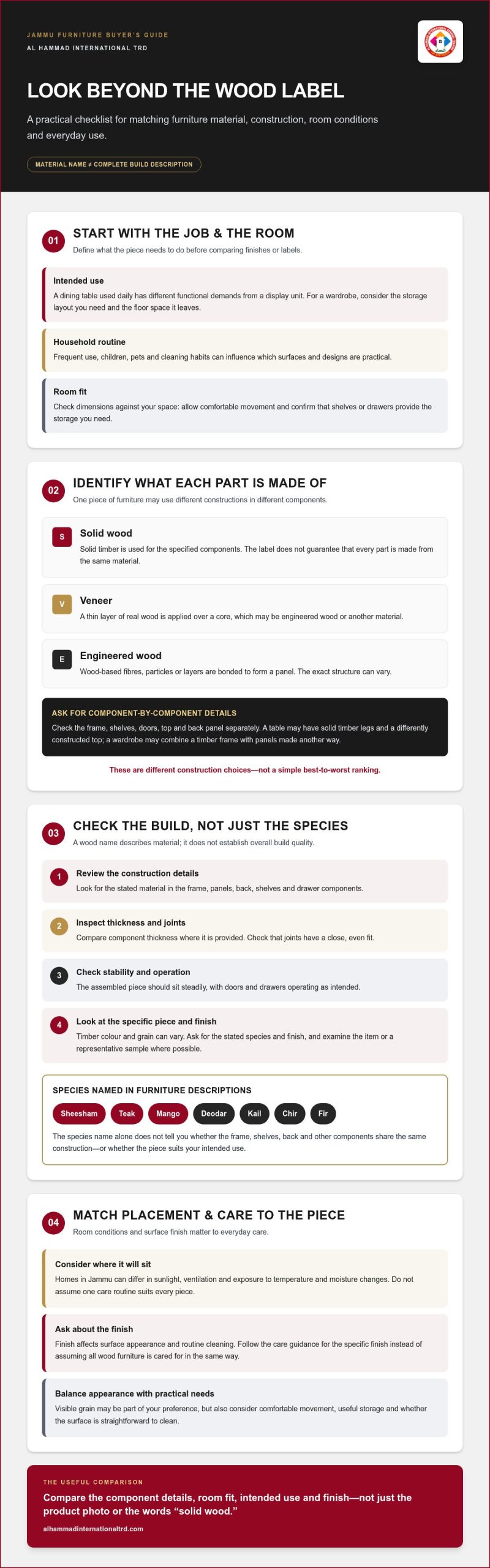
How to Inspect and Care for Solid Wood Furniture in Jammu
A careful inspection helps you judge whether a piece suits its intended place and routine. Use this checklist in a showroom or while reviewing online product details. If you can’t inspect the item in person, look for clear specifications and images that show the relevant components.
What should you check before choosing a furniture piece?
- Measure the space and access route. Note the room’s available footprint, the furniture’s full dimensions and the route it must take through doors, corridors or stairways. Leave enough room for movement and for drawers or doors to open.
- Read the construction description. Check what the frame, top, shelves, back, doors and drawer components are made from. A general “wood” or “solid wood” label may not explain every part.
- Look over the finish. Inspect visible surfaces, edges and corners for a consistent appearance. Consider whether the finish suits the piece’s expected use and the cleaning routine you can follow.
- Check joints and stability. Where possible, look for joints that fit neatly and test whether the item feels steady on the floor. Notice any visible gaps, loose-feeling connections or unexpected movement.
- Test the hardware and function. Open and close drawers and doors. Check that handles and hinges feel secure and that moving parts work smoothly.
- Match details to daily use. Compare the dimensions, storage layout and construction with the room and household routine. A frequently used table has different demands from furniture used occasionally.
How should solid wood furniture be maintained?
Care should follow the specific wood and finish, not a universal rule for all furniture. Use the product’s care instructions and a gentle routine appropriate to its surface. Avoid applying cleaners, oils or treatments unless they’re recommended for that finish. A product intended for one surface may affect another differently.
Placement and everyday habits can influence how a finish looks over time. Consider direct sunlight, nearby heat sources, spills and how much moisture the piece may encounter in its room. Seasonal changes can also affect wood, but the response depends on the material, construction, finish and conditions in the home. If you notice changes, follow guidance suited to that specific piece rather than trying an unverified treatment.
When choosing solid wood furniture Jammu, keep construction details and care requirements alongside your measurements. Compare indoor furniture options with the space and everyday needs you’ve identified.
Finding Solid Wood Furniture in Jammu: Ready-Made or Custom-Made?
Choose ready-made furniture when its dimensions, storage and function already suit your room. Consider a tailored design when a standard size leaves awkward gaps, blocks movement or doesn’t provide the storage you need. The decision is about practical fit as well as appearance. For solid wood furniture Jammu buyers, describe the construction you want clearly and compare it with the details of the finished piece.
When should Jammu buyers consider custom-made furniture?
Custom-made furniture can be useful when a room has unusual dimensions or a piece needs to serve a specific purpose. Al Hammad International trd offers custom-made furniture tailored to customer design requirements. Before settling on a design, write down the available width, height and depth, how the furniture will be used, and what it needs to store. Note your preferred appearance and the material description you’re looking for, too. These details help define the requirements for a tailored piece while keeping daily function in view.
For example, a storage unit may need to fit a particular wall while leaving access to a doorway, or a bedroom piece may need a specific arrangement of shelves and drawers. A ready-made option may work well if its dimensions and layout meet those needs. For more guidance, see this guide to custom-made furniture in India.
A simple next-step checklist for choosing furniture
Put your requirements in writing before comparing options. Use this checklist to keep the decision focused:
- Room: Identify where the furniture will go and what must remain accessible.
- Measurements: Record the available space and check the route through the home for bringing the piece in.
- Intended use: Note how often it will be used and what it needs to hold or support.
- Material description: Specify whether you’re considering solid wood, veneer or engineered construction, and look for details about each component.
- Appearance and care: Record your preferred look and the routine you can follow for the stated finish.
Compare each product description against this list. If a ready-made piece meets the dimensions and functional requirements, it may be a straightforward fit. If your room or use calls for tailored dimensions or design, custom-made furniture provides a way to work from those requirements. See Al Hammad International trd furniture options alongside your checklist.
Choose Furniture That Fits Your Home and Routine
A good furniture choice starts with clear information. Compare solid wood, veneer and engineered construction by checking what each component is made from, how the piece is built and what care its finish needs. Then match those details to the room, dimensions and frequency of use. A material label alone can’t tell you whether a particular piece is right for your everyday needs.
For anyone considering solid wood furniture Jammu, weigh appearance alongside practical fit, construction and care preferences. Ready-made furniture can suit a room when its size and function align with your needs. If dimensions or use call for a tailored design, Al Hammad International trd offers custom-made furniture shaped around customer design requirements. Its indoor furniture serves residential and commercial environments, with a local focus on Jammu and Kashmir.
Use your measurements and priorities to guide your choice. Explore Al Hammad International trd’s furniture options for your home in Jammu and Kashmir.
Frequently Asked Questions
What is considered solid wood furniture?
Solid wood furniture has components made from solid timber rather than a wood surface applied over a different core. A piece may still use different construction for different parts, so the frame, top, shelves, doors and back may not all be solid wood. Check the product description for each component. Veneer is a thin layer of real wood over a core, while engineered wood is made from bonded wood-based materials.
Is solid wood furniture suitable for homes in Jammu?
Solid wood furniture can suit a home in Jammu if its construction, finish, placement and care needs fit the room and household routine. Homes can differ in sunlight, ventilation and exposure to moisture or temperature changes, so there’s no single rule for every space. Consider how often you’ll use the piece, where it will sit and what care its finish requires. Choose based on the specific product, not the material label alone.
How can I tell if furniture is solid wood or veneer?
Start with the written construction details. Look for descriptions of the frame, top, edges, shelves and back, since a piece may combine solid timber with panels made differently. Veneer has a real-wood surface over another core, so a wood-grain appearance alone doesn’t prove the component is solid timber. If viewing the furniture in person, examine edges and less-visible areas, then compare what you see with the product description.
Which wood is best for furniture in Jammu?
There isn’t one best wood for every furniture need in Jammu. The right choice depends on the intended use, construction, finish, room conditions and care expectations. Species such as sheesham, teak and mango appear in Indian furniture descriptions, while Deodar, Kail, Chir and Fir are associated with timber in Jammu and Kashmir. Treat these as material categories, not a quality ranking. Compare the specific product details and intended use before deciding.
Does solid wood furniture need special care?
Solid wood furniture needs care suited to its specific wood and finish. Follow the product’s instructions and use gentle routine cleaning appropriate for the surface. Avoid applying oils, treatments or cleaning products unless they’re recommended for that finish. Placement matters too: sunlight, heat, spills and moisture can affect how a finish looks over time. For furniture in Jammu homes, consider the conditions in the room rather than assuming every home needs the same care routine.
Is custom-made furniture better than ready-made furniture?
Custom-made furniture isn’t automatically better; it’s useful when your dimensions, storage or functional requirements call for a tailored design. Ready-made furniture can be a practical choice if its size, layout and construction suit the room. Al Hammad International trd offers custom-made furniture tailored to customer design requirements, alongside indoor furniture for residential and commercial environments. Compare each option against your measurements, intended use and preferred appearance to decide what fits.
What should I check before buying solid wood furniture?
Before buying, measure the room, furniture footprint, doorway and route into the space. Read the construction description for the frame, panels, shelves and back. Inspect the finish for consistency, check joints and stability where possible, and test doors, drawers and other hardware. Consider how the piece will be used and what care the finish requires. These checks help solid wood furniture Jammu buyers compare the actual build with their needs.
Explore Al Hammad International trd’s furniture options to find a fit for your space in Jammu and Kashmir.