
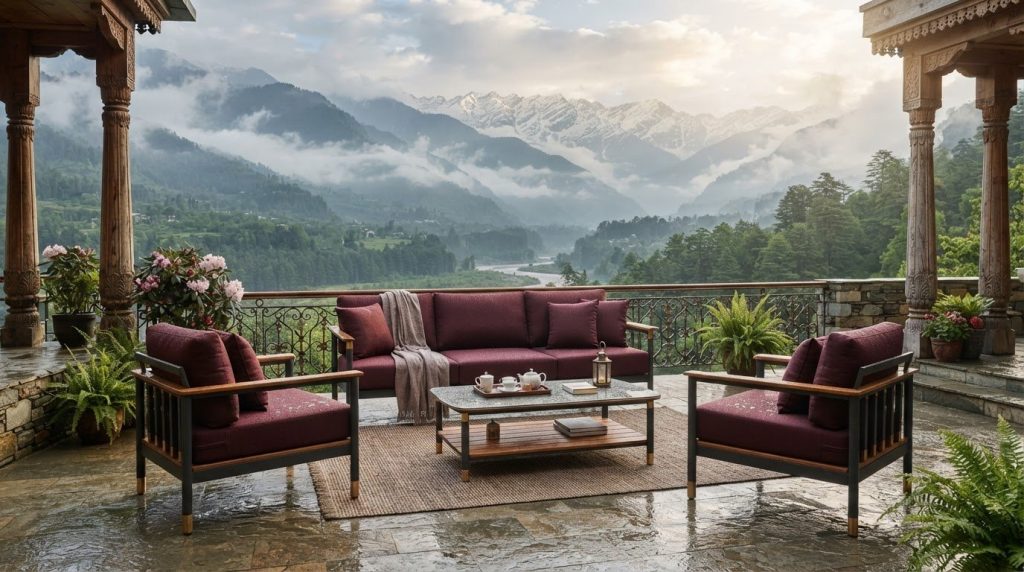
A single monsoon season is often all it takes to turn an attractive patio set into rusted scrap and split timber. You’ve likely experienced the frustration of outdoor cushions that absorb water and breed mold, or synthetic wicker that dries out and cracks under blistering summer heat. Investing in dependable weather resistant outdoor furniture India requires looking well past showroom aesthetics to examine how raw materials, mechanical joinery, and protective finishes hold up under harsh environmental stress.
True long-term performance demands engineered harmony between structural framing, corrosion-proof hardware, and breathable outdoor textiles. In this 2026 selection guide, you’ll discover how to evaluate durable exterior furniture built to withstand torrential downpours, intense UV exposure, and sharp winter temperature swings across different regional microclimates. We break down proven materials like powder-coated aluminum, resilient synthetics, and treated timbers, helping you select robust joinery and apply simple maintenance routines that keep your outdoor spaces fully functional year after year.
Key Takeaways
- Learn how to evaluate weather resistant outdoor furniture India by pairing materials like powder-coated aluminum and high-grade synthetics to your specific regional climate.
- Discover why open-cell reticulated quick-dry foam and solution-dyed textiles are essential to eliminate water retention and mold growth during severe monsoons.
- Identify the hidden build standards that prevent failure, including marine-grade hardware, seamless frame welds, and integrated drainage weep-holes.
- Use our structured 2026 checklist to inspect protective finish thickness and structural integrity before making an investment.
- Explore how custom-made manufacturing solutions provide climate-appropriate durability for unique terrace, garden, and hospitality layouts.
Understanding Weather Resistant Outdoor Furniture for Indian Climates
Outdoor furniture in India faces some of the most aggressive environmental conditions in the world. True outdoor engineering goes beyond applying a surface clear-coat to standard indoor materials. Sourcing reliable weather-resistant materials requires framing, joints, and textiles capable of handling sustained open-air exposure without dimensional warping or chemical breakdown. For buyers evaluating weather resistant outdoor furniture India, understanding structural engineering is the only way to avoid premature replacements.
Northern regions like Jammu and Kashmir present unique challenges. While southern and coastal belts face relentless humidity and salt spray, northern mountain spaces deal with sub-zero winter temperatures, snowfall, and intense freeze-thaw cycles. Substandard furniture absorbs ambient moisture that freezes, expands, and splits frame welds or wood grains from the inside out. Specifying outdoor furniture requires matching product specifications directly to local climate realities.
Key Climate Challenges Across Indian Outdoor Spaces
- Monsoon Saturated Humidity: Months of continuous rain cause standing moisture, leading to fungal rot in softwoods and galvanic corrosion along metal joinery points.
- Intense Solar Radiation: Summer UV degradation breaks down polymer chains in low-grade plastics, leading to chalking, thermal expansion, and surface paint delamination.
- Freeze-Thaw Cycling: In northern and high-altitude locations, water trapped within unsealed joints freezes and expands, cracking brittle castings and loosening mechanical fasteners.
Water-Resistant vs. Truly All-Weather Construction
Many commercial listings advertise water resistance based purely on temporary hydrophobic chemical sprays. These topical treatments degrade quickly under continuous monsoon rain and direct sunlight. Once the spray washes away, the underlying porous substrates absorb moisture and rot.
Truly all-weather outdoor furniture relies on inherently non-porous cores and comprehensive mechanical engineering. Aluminum frames naturally resist oxidation, while high-density polyethylene resists moisture absorption entirely. Additionally, proper exterior engineering incorporates integrated weep-holes at the base of hollow frame legs. These exit channels prevent trapped rainwater from pooling inside metal tubing, protecting the assembly against internal rust and frost expansion.
Comparative Material Guide: Metals, Woods, and Synthetics
Selecting the right build materials determines how your setup handles moisture, high wind, and seasonal temperature shifts. No single material suits every setting. Balconies, open lawns, and exposed terraces all demand different balances of structural mass and atmospheric resistance. Reviewing standard raw materials helps you choose weather resistant outdoor furniture India that performs reliably across shifting seasons.
Metals: Powder-Coated Aluminum vs. Galvanized Steel
Powder-coated aluminum is the premier choice for moisture-heavy environments. Aluminum forms its own protective oxide layer, completely eliminating the rust risk common to untreated ferrous metals. It is lightweight, making it easy to rearrange on residential balconies. For open rooftop terraces exposed to strong seasonal storms, electro-galvanized steel or heavy cast iron frames offer the necessary ballast to prevent wind displacement, provided the zinc coating remains fully intact.
Hardwoods: Teak, Eucalyptus, and Acacia Longevity
Natural hardwoods present unmatched warmth, but they require strict grading. Standard interior timbers like untreated mango wood or Sheesham crack quickly under alternating monsoon rain and direct sun. Grade-A teak remains the gold standard because its dense grain contains natural silica and rubber oils that repel insects and standing water. Unsealed teak naturally develops a distinguished silver-grey patina over time. You can explore our teak outdoor furniture guide to learn about periodic oiling techniques that preserve the wood’s original golden hue.
Synthetic Weaves: High-Density Polyethylene (HDPE) Rattan
Synthetic wicker is widely used across patio seating, but material quality varies significantly:
- HDPE (High-Density Polyethylene): UV-stabilized and through-dyed. It resists thermal cracking, retains its core color under harsh sunlight, and stays flexible through winter chills.
- Recycled PVC Weaves: Highly vulnerable to ultraviolet rays. Low-cost PVC dries out, becomes brittle, and unravels after a single summer.
Quality synthetic wicker is hand-woven over a fully welded aluminum frame to prevent structural sagging. If you need commercial-grade durability or custom layouts for your space, exploring engineered collections from Al Hammad International ensures frames and weaves match your microclimate.
Cushions, Foams, and Hardware: The Vulnerable Failure Points
Most outdoor furniture sets do not fail at the frame. They deteriorate at the soft goods and structural connection points long before the primary chassis shows wear. Sourcing truly reliable weather resistant outdoor furniture India requires examining internal padding densities, fabric dye processes, and fastener metallurgy. Overlooking these hidden components often leaves you with waterlogged cushions and seized, rust-stained joints after a single wet spell.
Open-Cell Quick-Dry Foam vs. Conventional Polyurethane
Standard polyurethane foam behaves like a sponge. It traps monsoon moisture, collapsing internal cell structures and creating persistent mildew odors. High-performance outdoor seating utilizes open-cell reticulated foam instead. Large, interconnected pores allow water and moisture to drain through instantly rather than pooling inside. Coupled with built-in antimicrobial agents and breathable mesh fabric vents on cushion undersides, these open-cell cores dry rapidly after heavy cloudbursts, preventing mildew buildup.
Marine-Grade Textiles: Solution-Dyed Acrylic and Olefin
Textile longevity depends heavily on coloring technology. Piece-dyed or printed fabrics have color applied only to the yarn surface, causing rapid sun bleaching under strong summer UV rays. Solution-dyed acrylics and olefins lock UV-stabilized pigments into the liquid polymer before extruding the fibers. The color runs through the entire cross-section of the thread.
- Hydrophobic Finish: Factory-applied fluoropolymer coatings cause surface water to bead up and run off easily.
- Stain Resistance: Non-porous fiber structures resist oil-based spills, tree sap, and dust accumulation.
- Maintenance: Simple cleaning using lukewarm water and mild, neutral soap maintains the protective coating without stripping surface barriers.
Corrosion-Proof Fasteners and Structural Hardware
Cheap zinc-plated or carbon steel fasteners trigger rapid galvanic corrosion when threaded into aluminum or exposed to outdoor humidity. The resulting rust permanently binds adjustment hardware, recline tracks, and leg bolts. Durable outdoor assemblies require grade 304 or grade 316 marine-grade stainless steel fasteners. In addition, insist on full-circumference robotic welds at every frame joint to prevent moisture ingress into internal channels.
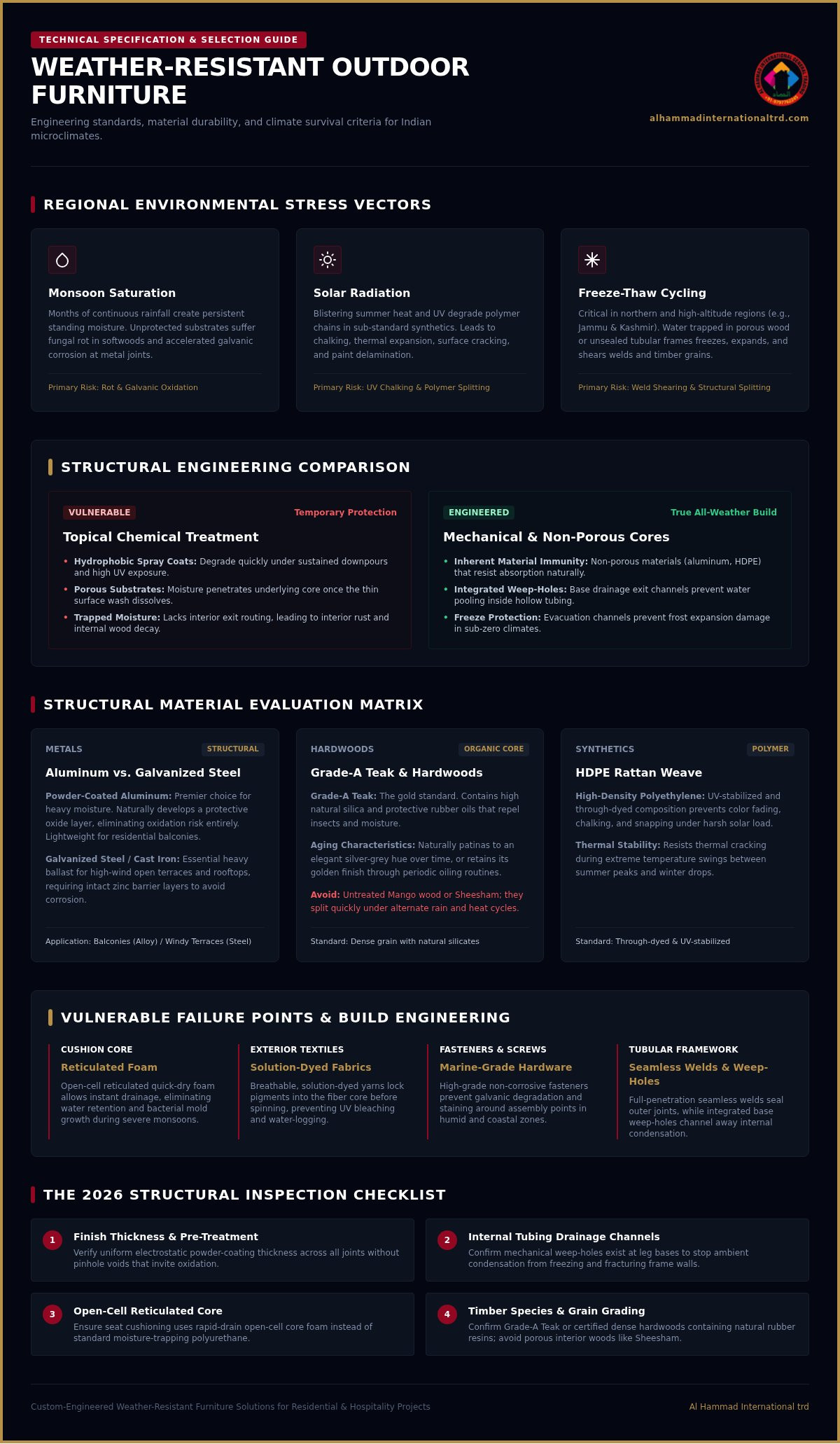
The 2026 Patio Furniture Weather-Resistance Checklist
A methodical evaluation before purchase prevents premature failure. Before investing in weather resistant outdoor furniture India, verify the structural engineering, textile specifications, and seasonal maintenance requirements. Compact layouts present unique spatial challenges, so balance piece dimensions against open circulation areas. If you are furnishing smaller terraces, consult our balcony furniture guide to optimize footpaths alongside durable materials.
Step 1: Frame Inspection and Surface Coating Quality
- Continuous Welds: Check joints for complete bead seals without gaps, pinholes, or slag that could let moisture enter hollow tubing.
- Coating Uniformity: Look for a smooth, architectural-grade powder coat free of orange-peel textures, micro-bubbles, or thin coverage along sharp frame edges.
- Drainage Outlets: Confirm weep-holes exist on lower crossbars to allow internal condensation to escape freely.
- Protective Foot Glides: Ensure tough nylon or rubber caps protect metal leg bases from standing water and prevent scratching outdoor tile.
Step 2: Fabric Durability and Removability Checks
Inspect soft goods with equal rigor. Confirm cushion covers feature heavy-duty, marine-grade outdoor zippers to simplify removal for periodic washing. Verify that sewing seams use UV-stabilized, bonded polyester thread rather than standard cotton thread, which rots quickly in humid air. Look for confirmed rub counts suitable for heavy residential or commercial use, alongside documented UV colorfastness ratings.
Step 3: Off-Season Protection and Storage Planning
Even robust exterior materials benefit from planned maintenance routines. Assess your site conditions, noting localized wind corridors, direct monsoon rain exposure, and daily sun patterns.
- Breathable Covers: Use custom-fitted polyester covers equipped with tie-down straps and air vents to prevent moisture condensation underneath.
- Monsoon Cushion Storage: Store soft cushions indoors or in ventilated deck boxes during prolonged torrential downpours.
- Biannual Upkeep: Establish a routine every six months to wash frames with neutral detergent and apply fresh oil to exposed hardwood surfaces.
For verified outdoor durability and precision configurations, contact Al Hammad International to evaluate heavy-duty commercial and residential collections.
Bespoke Weather-Resistant Furniture Solutions with Al Hammad International
Standard retail dimensions rarely match the architectural realities of distinct outdoor footprints. Irregular verandas, exposed rooftop terraces, and expansive lawns require custom spatial planning alongside tailored durability. Al Hammad International trd supplies engineered indoor furniture, home appliances, and custom made outdoor furniture specifically configured to meet these varied architectural demands. For property owners and commercial developers specifying weather resistant outdoor furniture India, bespoke fabrication ensures raw materials match the environmental stress of each site.
Tailored Engineering for Challenging Microclimates
Based in Jammu and Kashmir, Al Hammad International trd applies regional expertise to build furniture capable of withstanding extreme environmental shifts. Mountain properties encounter heavy winter snowloads, sub-zero temperatures, and sharp frost cycles that destroy standard factory pieces. Custom manufacturing allows direct control over every structural element:
- Heavy-Gauge Framing: Wall thicknesses on aluminum and steel profiles can be increased to counter high mountain gusts on open decks.
- Targeted Timber Curing: Hardwood treatments are matched to regional moisture levels to prevent grain splitting under freezing conditions.
- Precision Sizing: Proportions are adjusted down to the centimeter, maximizing seating efficiency on narrow balconies or grounding expansive garden pavilions.
Residential and Commercial Hospitality Capabilities
Hospitality environments require high-traffic durability without compromising exterior design. Boutique hotels, vineyard resorts, and private villas demand furniture that withstands relentless daily guest use, chlorine splashes around pools, and continuous sun exposure. Seamless transitions between exterior lounges and indoor dining spaces create a unified layout. You can coordinate your exterior selections with our custom made furniture services to maintain continuous design lines throughout your property.
Every commercial build utilizes heavy-duty joinery, industrial powder coatings, and certified all-weather cushioning systems. To explore curated collections engineered for open-air performance, review our luxury outdoor furniture collections and discover durable solutions for your next project.
Build Lasting Open-Air Living Spaces
Investing in exterior furniture requires looking beneath the surface finish to evaluate framing alloys, foam porosity, and fastener metallurgy. Powder-coated aluminum, UV-stabilized HDPE weaves, and Grade-A teak remain the dependable standard for high-humidity and high-sunlight regions. Pairing these resilient structural materials with quick-drying reticulated foam and marine-grade stainless hardware ensures your setup withstands continuous monsoons without harboring mold or showing rust streaks.
When off-the-shelf catalog dimensions don’t fit your layout, bespoke engineering delivers the right balance of scale and structural durability. Sourcing high-grade weather resistant outdoor furniture India is simple when you partner with manufacturers experienced in severe microclimates, from northern mountain frost to coastal humidity. Backed by local Jammu and Kashmir manufacturing operations, Al Hammad International produces heavy-duty commercial collections, weather-treated hardwoods, and tailored residential assemblies designed for year-round exposure. Explore weatherproof outdoor furniture at Al Hammad International to furnish your patio, terrace, or hospitality space with lasting confidence.
Frequently Asked Questions
Can weather-resistant outdoor furniture remain outside during the Indian monsoon season?
Yes, properly engineered weather resistant outdoor furniture India can stay outside, provided structural frames feature non-porous materials like powder-coated aluminum or Grade-A teak. However, soft cushions should be stored indoors or placed in ventilated storage boxes during torrential downpours to prevent saturated cores. Using breathable outdoor covers also shields hard framing from debris, pooling water, and surface soil buildup while allowing internal condensation to escape freely.
Which metal is best suited for outdoor patio furniture in humid climates?
Powder-coated aluminum is the most reliable metal for high-humidity climates. Unlike standard iron or mild steel, aluminum does not oxidize into destructive red rust when exposed to persistent moisture. The electrostatically applied powder coat creates an impermeable barrier against atmospheric dampness and rain. For wind-exposed installations in northern valley regions like Jammu and Kashmir, heavy-gauge aluminum profiles provide structural ballast without corrosion risks.
How do I prevent wooden outdoor furniture from rotting or cracking in India?
Prevention starts with selecting naturally resilient timbers such as Grade-A teak, which contains dense organic oils and silica that repel moisture. Keep timber off waterlogged ground using protective nylon foot glides. Apply a breathable, UV-filtering exterior timber sealer or teak oil annually before the monsoon arrives. Regular surface cleaning with mild soap prevents fungal spores from taking hold, while shaded positioning prevents extreme thermal expansion.
What is the difference between regular outdoor cushions and quick-dry foam cushions?
Regular outdoor cushions use standard polyurethane foam wrapped in water-resistant fabric. Once water breaches the seams, it acts like a sponge, holding stagnant moisture for weeks and breeding mold. Quick-dry foam features an open-cell reticulated structure where liquid flushes straight through large internal pores. When paired with marine-grade mesh vents on the bottom panel, quick-dry cushions dry in hours after downpours, eliminating persistent odors and mildew.
Does synthetic HDPE wicker furniture peel or crack under harsh direct sunlight?
High-density polyethylene (HDPE) synthetic wicker does not peel or crack under harsh sun because it contains embedded ultraviolet stabilizers. The color pigment is distributed throughout the entire strand rather than printed on the exterior. In contrast, cheaper PVC or low-grade recycled plastics lack UV inhibitors, causing them to turn brittle, fade, and snap within months under intense northern summers and shifting mountain weather.
How often should outdoor teak furniture be oiled or treated to maintain its quality?
High-grade teak outdoor furniture should be cleaned and oiled once or twice a year, ideally before the monsoon and before dry summer heat. Applying specialized teak sealer preserves the warm golden honey tone. If left untreated, the wood naturally oxidizes into an elegant silver-grey patina over time without losing structural strength. Properties facing extreme freeze-thaw cycles across Jammu and Kashmir benefit from an extra pre-winter protective coat.
What should I look for in outdoor furniture hardware to prevent rust spots?
Insist on grade 304 or grade 316 marine-grade stainless steel hardware for all bolts, brackets, and assembly screws. Standard zinc-plated or carbon steel screws quickly corrode in outdoor dampness, permanently binding joints and leaving unsightly rust stains on stone terraces. When selecting weather resistant outdoor furniture India, inspect connection points to verify fasteners use non-corrosive alloys and check that joints feature complete, sealed perimeter welds.