
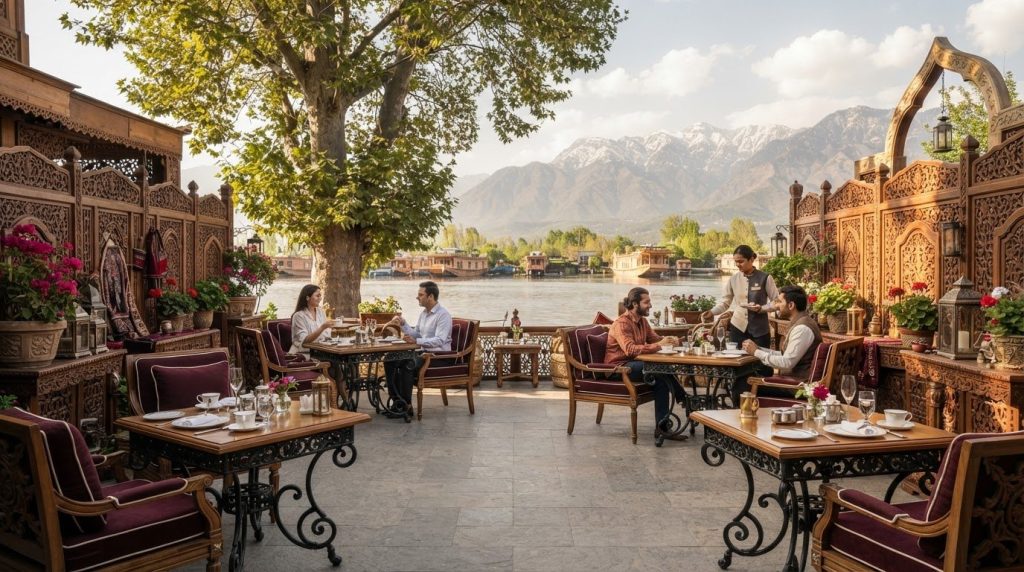
What if adding more seats makes your café’s outdoor area harder to serve? Choosing outdoor furniture for cafes in Srinagar means balancing comfortable dining with clear service routes and furniture suited to regular customer use. The right setup depends on your available space, daily routine, and exposure to the elements.
Materials affect upkeep, seating needs to stay comfortable through a meal, and a compact layout still has to leave room for staff and customers to move. This guide explains how to compare these considerations and choose furniture that fits your café’s layout and seasonal use. You’ll also learn when ready-made outdoor furniture may suit your plans and how custom-made furniture can be tailored to a café’s design requirements. Use the practical checklist to make a more confident choice for a welcoming, functional outdoor dining area in Srinagar, Jammu and Kashmir.
Key Takeaways
- Assess customer comfort, staff movement, and available space before choosing outdoor furniture for cafes in Srinagar.
- Compare materials by their practical strengths and upkeep needs, then consider how each suits your café’s daily use.
- Choose compact tables, grouped seating, or a flexible mix while keeping entrances and service routes clear.
- Measure the area and note seating goals, surface conditions, and outdoor exposure before comparing furniture options.
- Choose ready-made outdoor furniture or consider custom-made pieces tailored to your café layout and design requirements.
What Srinagar Cafe Owners Need from Outdoor Furniture
Outdoor seating has to work for customers and staff within the café’s available footprint. Chairs should feel comfortable and stable, tables need enough usable surface space, and the arrangement must leave clear routes for serving and movement. These priorities matter in a commercial setting, where furniture is used repeatedly, moved around, and cleaned as part of regular service.
Set priorities before comparing styles. Check whether chairs remain steady on the seating surface, tables hold the items customers need, and staff can pass without shifting furniture. Consider upkeep too: how a surface should be cleaned, what care it needs, and whether that routine fits your café’s operations. The common types of outdoor furniture include different materials and formats, but a category alone doesn’t tell you whether a piece suits day-to-day café use.
Commercial café outdoor furniture is seating and tables selected to support customer comfort, service movement, repeated use, and manageable care.
How seating affects the café customer experience
Seat comfort and table usability shape how comfortably customers can enjoy a meal or drink. Check that a table offers practical space for the items your menu and service typically require without crowding the seating area. Then assess the arrangement from both sides: customers need a clear way to reach and leave their seats, while staff need routes to serve and clear tables. A layout that looks orderly on an empty patio may feel restrictive once occupied, so consider how chairs move when people sit down or stand up.
Planning for Srinagar’s outdoor setting
Assess conditions at your specific site rather than relying on assumptions about Srinagar. Note how much direct sun, rain, or wind the furniture may encounter, and consider which seasons the outdoor area is intended to serve. A covered seating area may have different exposure from an open-air layout, but a roof doesn’t necessarily protect every table from wind or rain. Record these conditions before comparing furniture and upkeep needs.
Keep the footprint practical. Mark entrances, service routes, and the paths customers use to move between tables. This helps you judge whether the furniture can support comfortable seating without making service or circulation difficult. For café projects, compare outdoor furniture and custom-made furniture against the space and design requirements.
How to Compare Outdoor Cafe Furniture Materials and Features
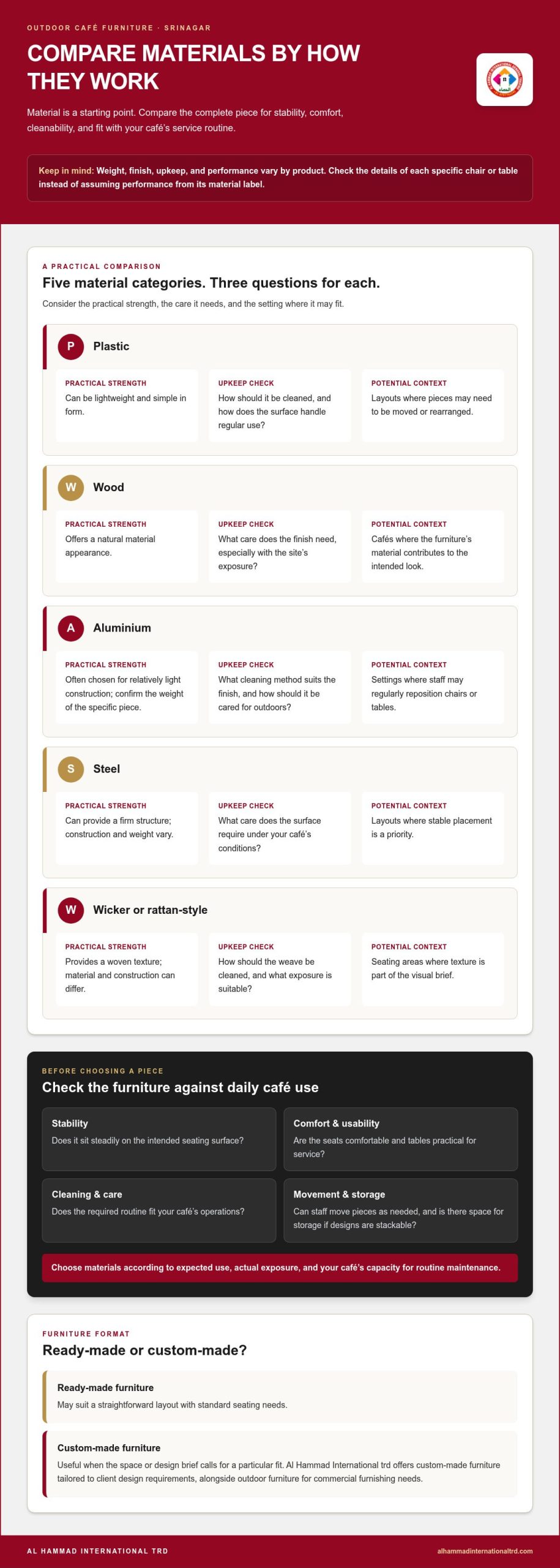
Material names are only a starting point. Compare each complete chair or table for stability, comfort, cleanability, and fit with your café’s service routine. The table below outlines broad considerations for common material categories. Actual weight, finish, upkeep, and performance vary by product, so review those details for each piece you’re considering.
| Material category | Practical strengths to consider | Upkeep questions | Potential use context |
|---|---|---|---|
| Plastic | Can be lightweight and simple in form. | How should it be cleaned, and how does the surface handle regular use? | Layouts where pieces may need to be moved or rearranged. |
| Wood | Offers a natural material appearance. | What care does the finish need, especially with the site’s exposure? | Cafés where the furniture’s material contributes to the intended look. |
| Aluminium | Often chosen for its relatively light construction; confirm the weight of the specific piece. | What cleaning method suits its finish, and how should it be cared for outdoors? | Settings where staff may regularly reposition chairs or tables. |
| Steel | Can provide a firm structure; construction and weight vary. | What care does the surface require under the café’s conditions? | Layouts where stable placement is a priority. |
| Wicker or rattan-style | Provides a woven texture; material and construction can differ. | How should the weave be cleaned, and what exposure is suitable? | Seating areas where texture is part of the visual brief. |
Choose materials based on expected use, actual exposure, and the café’s capacity for routine maintenance. Treat claims about weather resistance, durability, or cleaning as product-specific details, not assumptions based on a material label alone.
Which furniture features matter in a busy café?
Test the essentials first: seating should feel comfortable, tables should sit steadily on the intended surface, and edges should work safely within close-set layouts. Consider whether staff can move pieces without disrupting service. Stackable or otherwise movable designs may help a café adjust its arrangement, but their suitability depends on the specific furniture and available storage space. Consider decorative details after these functional requirements.
Ready-made or custom-made furniture for a Srinagar café?
Ready-made furniture may suit a straightforward layout with standard seating needs. Custom-made furniture is useful when the space or design brief calls for a particular fit. Al Hammad International trd offers custom-made furniture tailored to client design requirements, alongside outdoor furniture for commercial furnishing needs. For more planning considerations, read the custom commercial furniture buying guide.
For outdoor furniture for cafes in Srinagar, compare the complete setup against service flow as well as appearance. Cornell’s hospitality design principles also emphasize the relationship between guest experience and functional space. Browse outdoor furniture options with your layout and practical priorities in mind.
Outdoor Cafe Furniture Layouts for Srinagar: Compare Seating Setups
A useful layout gives customers comfortable access to tables while keeping entrances, serving routes, and movement between seats clear. Choose a setup that suits the shape of the outdoor area and the way staff serve, rather than arranging furniture only to fit in more seats. These three concepts offer a starting point for planning outdoor furniture for cafes in Srinagar.
- Compact two-person seating: Individual small tables can suit narrow or segmented areas and give pairs a defined place to sit. Check that pulled-out chairs won’t obstruct the entrance or serving route.
- Grouped tables: Placing tables in a clear group can work for cafés that regularly seat parties together. Keep access between tables practical for customers and staff, and avoid creating a bottleneck near the doorway.
- Flexible mixed arrangement: A combination of smaller tables and larger group seating can support different service needs. Movable pieces may help staff adjust the setup, provided they can be repositioned without blocking circulation or storage areas.
Before settling on a plan, mark the entrance, the route staff use to carry and clear orders, and the paths customers take to reach seats. Walk through the proposed arrangement as if chairs were occupied. A layout that looks open on paper can become difficult to use once people are seated.
Choosing a layout for a small or narrow café area
Protect access first. A compact two-person setup may be easier to place in separated sections, while a small grouped arrangement could suit an area with a wider footprint. Don’t judge the plan by seat count alone. Allow for chairs being pulled out and for staff to pass, then consider movable furniture if the service routine calls for adjustments at different times.
Planning an open terrace or larger outdoor dining area
On a larger terrace, define seating zones so customers can identify where to sit and staff can follow a straightforward serving route. Observe which parts receive shade and which are more exposed before positioning tables. Conditions may differ across the same terrace and over time. For broader exposure considerations, see the weather-resistant outdoor furniture guide. The outdoor garden furniture guide offers additional context on residential outdoor spaces, helping distinguish home-use considerations from café service needs.
A Step-by-Step Buying Checklist for Srinagar Cafe Furniture
A consistent project brief makes it easier to compare ready-made furniture with custom-made options. Record how the area works before reviewing products, so you can assess each choice against the same café needs.
Prepare a clear café furniture brief
Start with a practical record of the space and its use. Include approximate measurements, entrances and other access points, the intended seating arrangement, surface conditions, outdoor exposure, and routine cleaning needs. Note any seasonal storage plans and the look you want the furniture to support. These details help narrow the options and make comparisons more relevant to the site.
Review the shortlist before making a decision
Use the same criteria for every option. Separate product specifications you can verify from assumptions, particularly for material, care, and outdoor suitability. A clear brief also gives custom-made furniture a practical reference: Al Hammad International trd tailors furniture to client design requirements.
- 1. Measure the area. Record approximate dimensions and note fixed features, entrances, and access points that affect where tables can go.
- 2. Set seating goals. Describe the seating arrangement you need, the kinds of tables that suit your service, and any visual requirements. Treat seat count as a goal to test against usable circulation, not a reason to crowd the space.
- 3. Map service routes. Mark how staff carry orders and clear tables, along with the paths customers use to enter, sit, and leave. Keep these routes in view as you compare furniture.
- 4. Record site conditions. Note the surface where furniture will stand and the area’s exposure to sun, rain, and wind. Distinguish covered seating from open-air sections, since their conditions may differ.
- 5. Compare furniture choices. Assess each option for comfort, fit, stability, cleaning needs, and how it supports daily service. Keep confirmed specifications separate from estimates or general material assumptions.
- 6. Review care and storage. Consider the cleaning routine your team can maintain and whether furniture needs to be moved or stored during particular periods. Use those requirements to judge practical upkeep.
- 7. Select a suitable route. Ready-made furniture may fit a straightforward layout. If your measurements or design brief call for a particular fit, custom-made furniture can be tailored to those requirements.
This process gives you a clearer basis for choosing outdoor furniture for cafes in Srinagar, whether you’re comparing ready-made choices or developing a custom brief. Explore outdoor furniture options for your café project.
Choosing Outdoor Furniture for Your Srinagar Cafe with Al Hammad International trd
A clear decision starts with the café itself. Define the usable outdoor area, consider how customers and staff will move through it, compare furniture for comfort and upkeep, then plan how it will be cared for. This keeps the choice grounded in daily operations as well as appearance.
Al Hammad International trd offers outdoor furniture for commercial furnishing needs. If a standard arrangement doesn’t align with a particular footprint or design brief, custom-made furniture is another option, tailored to client design requirements. Apply the same practical criteria to both: fit, intended use, service flow, exposure, and maintenance.
When custom-made outdoor furniture may suit the project
Custom-made furniture may suit a café with an unusual layout, a specific table arrangement, or distinct design requirements. A clear brief helps define the project. Include area measurements, access points, seating plans, visual preferences, and upkeep priorities. For broader outdoor furniture considerations, see the luxury outdoor furniture guide.
What to include in the next planning step
Bring the main decisions into one working brief. This gives the furniture discussion a clear focus and helps you compare options against the café’s needs.
- Area plan: Note usable space, surface conditions, entrances, and service routes.
- Seating arrangement: Describe the intended seating mix and practical table needs.
- Design preferences: Record the visual direction and any layout requirements that may call for custom-made furniture.
- Upkeep priorities: Outline routine cleaning and any seasonal storage plans.
A well-defined brief connects the layout, intended use, and design requirements. Al Hammad International trd serves commercial furnishing needs with outdoor and custom-made furniture options for café projects in Srinagar and Jammu and Kashmir.
Explore furniture solutions for your café and consider which options best fit your project brief.
Plan an Outdoor Setup That Works Every Day
A practical café furniture choice begins with the space and the service routine. Measure the outdoor area, keep customer and staff movement in mind, then compare seating for comfort, table use, exposure, and upkeep. These steps help you assess outdoor furniture for cafes in Srinagar against everyday needs, not appearance alone.
Al Hammad International trd offers outdoor furniture for commercial furnishing needs, alongside custom-made furniture tailored to client design requirements. A clear brief covering the layout, seating preferences, and care priorities can guide the next decision, whether you’re considering ready-made options or a tailored approach.
Explore outdoor furniture and custom-made solutions for your café project. With a defined plan and the right priorities, you can build an outdoor dining area that supports comfortable seating and smooth service.
Frequently Asked Questions
What outdoor furniture is best for a cafe in Srinagar?
The best choice is furniture that suits your café’s space, service routine, customer comfort, and maintenance capacity. For outdoor furniture for cafes in Srinagar, assess the actual site, including whether the seating is covered or open, and consider its exposure to sun, rain, and wind. Compare complete chairs and tables for stability, usable surface area, cleanability, and fit with staff routes. Review product-specific care and outdoor suitability rather than relying on material labels alone.
How do I choose outdoor cafe furniture for a small space?
Measure the usable area and plan clear access before selecting tables and chairs. Mark entrances, serving routes, and the paths customers take to sit and leave. Compact two-person tables may suit separated or narrow areas, while movable pieces can offer flexibility if staff can reposition them easily. Test the proposed arrangement with chairs pulled out, and prioritize comfortable movement over fitting in the maximum number of seats.
Which material is suitable for outdoor cafe furniture?
No single material is suitable for every café. Plastic, wood, aluminium, steel, and wicker or rattan-style furniture differ in construction, weight, surface care, and appearance. Compare the specific piece, not just its material category. Consider the site’s exposure, how often furniture will be cleaned or moved, and what upkeep the team can manage. Treat claims about weather resistance or durability as product-specific and review them before choosing.
Can cafe outdoor furniture be custom-made?
Yes. Custom-made furniture can be tailored to client design requirements, making it an option when a café has a distinct layout or a particular design brief. Prepare approximate area measurements, access points, seating needs, table requirements, visual preferences, and upkeep priorities. A clear brief gives the project a practical starting point without assuming a particular material, dimension, or outcome. Al Hammad International trd offers custom-made furniture for residential and commercial furnishing needs.
How many outdoor tables should a cafe place in its seating area?
There’s no universal table count. It depends on the usable footprint, table sizes, seating arrangement, and routes customers and staff need. Sketch the area and mark entrances, serving paths, and where chairs will extend when occupied. Then test a proposed layout for access and circulation before deciding how many tables fit comfortably. A lower count may be more practical if additional tables would obstruct service or make it difficult for customers to move.
How do I maintain outdoor furniture at a cafe?
Follow the care instructions for each furniture piece and build routine cleaning into the café’s operations. The appropriate method depends on the material and finish, so don’t assume one cleaner or process suits every surface. Check furniture regularly for loosened parts, instability, or surface changes, and address cleaning needs promptly. If you plan seasonal storage, include moving and storage arrangements in the furniture brief and account for the space those items require.
Is custom-made or ready-made furniture better for a cafe?
Ready-made furniture may suit a straightforward layout and familiar seating needs. Custom-made furniture may be a better fit when the café has a distinct footprint or design requirements that standard options don’t address. Compare both against the same criteria: comfort, fit, service flow, care, and exposure. Al Hammad International trd offers outdoor furniture and custom-made furniture for commercial furnishing needs, with custom designs tailored to client requirements.