
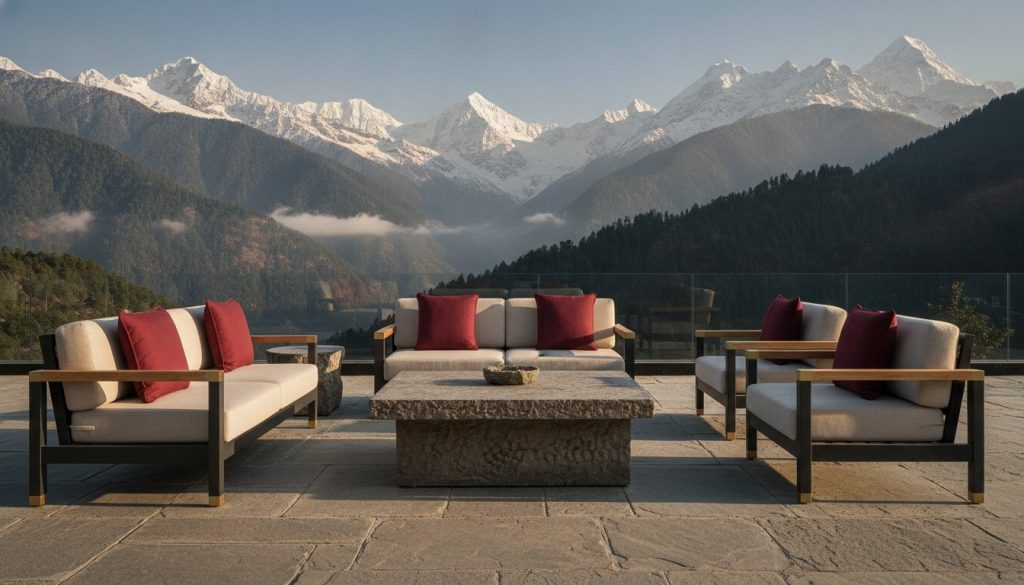
In Jammu and Kashmir, heavy duty isn’t just a label. It’s a technical requirement for survival against extreme seasonal shifts. Whether you’re managing a resort in Gulmarg or a garden in Jammu, you’ve likely seen standard furniture fail. High winds toss light frames. Intense UV rays make common plastics brittle. Finding reliable heavy duty outdoor furniture means looking beyond aesthetics to find pieces that handle 45°C summers and -15°C winters without flinching.
It’s frustrating to invest in an outdoor space only to watch wood rot or metal rust within a single year. You need a setup that remains beautiful and functional despite the weather. This guide shows you how to select and maintain furniture that offers a long-lasting investment with low maintenance requirements. We’ll examine essential BIS standards for protective coatings like IS 13871:2021, legal timber sourcing under local laws, and why custom solutions are often the best choice for the region’s unique environmental challenges. This approach ensures your furniture stays durable and attractive through every season.
Key Takeaways
- Identify why Jammu and Kashmir’s extreme thermal gradients and heavy snow loads demand higher structural standards than standard residential furniture.
- Compare the longevity of teak, powder-coated aluminum, and WPC to select materials that withstand both intense UV and heavy monsoon rain.
- Learn to spot high-performance construction features like full-circumference welds and stainless steel hardware to prevent structural failure and rust.
- Explore how custom heavy duty outdoor furniture provides a tailored fit for local architectural styles while meeting rigorous environmental demands.
- Establish a seasonal maintenance routine to protect your investment from winter freeze-thaw cycles and moisture-related damage.
What Defines Heavy Duty Outdoor Furniture in Jammu and Kashmir?
Heavy duty outdoor furniture consists of pieces engineered with high-density materials and reinforced frames intended for extreme environments. In Jammu and Kashmir, standard retail options often fail because they lack the structural integrity to handle the region’s diverse climate. While a product might be labeled “weather-resistant,” this usually implies it can survive light rain or occasional sun. True heavy duty classification requires meeting industrial benchmarks for weight-to-strength ratios and using non-corrosive hardware, such as 304 or 316-grade stainless steel. These specifications prevent the rust streaks and structural degradation common in lower-grade patio sets. For local businesses and homeowners, choosing the right grade is a matter of long-term reliability.
Key performance indicators for the J&K market include:
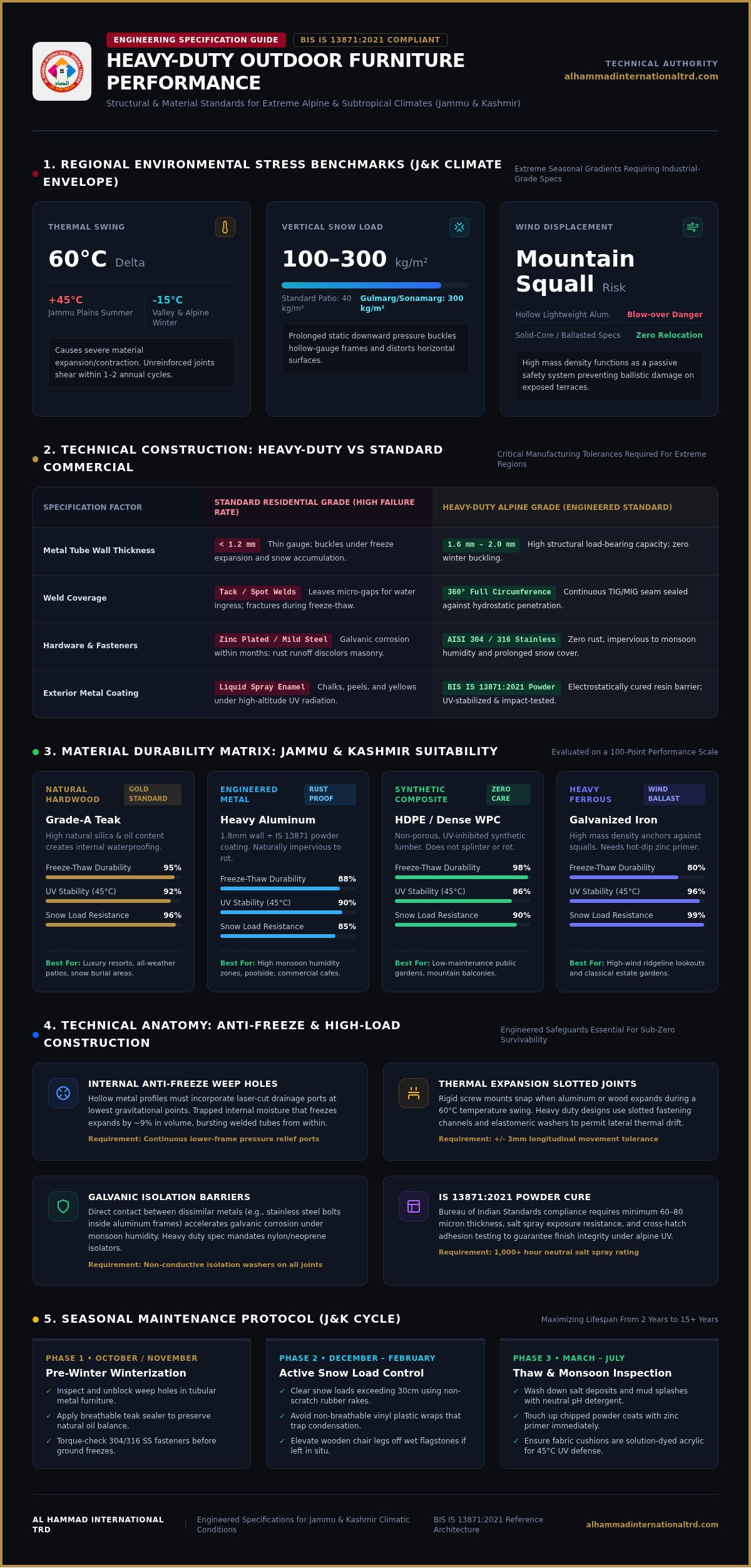
- Structural wall thickness of 1.6mm to 2.0mm for metal frames to prevent buckling.
- UV-stabilized coatings that meet IS 13871:2021 standards for exterior powder coating.
- Load-bearing capacity designed to handle sustained snow weight without frame warping.
- Hardware that resists galvanic corrosion in high-humidity monsoon zones.
The Role of Weight and Density
In the wind-prone hills of the J&K region, weight is a safety feature. Lightweight hollow frames are easily displaced by mountain squalls, which can cause property damage or injury. Selecting heavy duty outdoor furniture with a solid core or thick-walled metal ensures the pieces stay grounded. High material density also serves as a critical barrier against moisture. It prevents internal rot in wood and water ingress in metals. For example, solid-core composites or pressure-treated hardwoods don’t allow water to settle in the grain. This density is what keeps the furniture functional for years rather than just one season.
Environmental Stressors Specific to J&K
J&K presents a dual challenge that standard furniture isn’t built to face. The Jammu plains experience summer peaks reaching 42°C to 45°C. High-altitude UV radiation at these levels rapidly degrades standard resins and fades low-quality fabrics. In the Kashmir Valley, snow load management is the priority. Tables and chair frames must resist vertical pressure from snow accumulation, which can reach 100 to 300 kg/m² in areas like Gulmarg or Sonamarg. Extreme temperature fluctuations also cause materials to expand and contract. Without reinforced joinery, these cycles create cracks in furniture joints. Professional-grade pieces account for these thermal stresses through engineered drainage and anti-freeze designs that prevent structural splitting during the winter freeze-thaw cycle.
Material Deep Dive: Choosing for Longevity and Performance
Material selection is the most critical factor when investing in heavy duty outdoor furniture for Jammu and Kashmir. The region’s environment requires materials that resist both high-altitude UV rays and sub-zero temperatures. Traditional options like acacia often require excessive maintenance to prevent warping in high-moisture zones. Instead, performance-driven materials like teak, marine-grade aluminum, and high-density polyethylene (HDPE) provide the necessary resilience. Choosing the right material ensures your furniture survives the transition from the humid monsoon to the freezing winter freeze-thaw cycles.
Metals: Aluminum vs. Wrought Iron
Powder-coated aluminum is the preferred choice for areas with high monsoon humidity, such as the Jammu foothills. It’s naturally rust-proof and lightweight enough for easy relocation, yet strong enough for commercial use. Powder-coating is a fusion process where dry powder is electrostatically applied and cured under heat to create a hard, protective finish for superior metal protection. To meet local standards, these coatings should comply with IS 13871:2021. For exposed, windy balconies in the J&K hills, wrought iron is often better. Its significant weight prevents furniture from shifting during mountain squalls. To ensure longevity, look for iron that has been hot-dip galvanized or treated with zinc-rich primers before the final finish.
Woods and Synthetics: Teak and HDPE
Teak remains the gold standard for outdoor garden furniture India. Its high natural oil content acts as a built-in water repellent, preventing rot even when buried under snow. For those seeking zero-maintenance solutions, Wood Plastic Composite (WPC) and HDPE lumber are rising in popularity. HDPE lumber is often heavier and more durable than traditional wood. It won’t splinter, crack, or fade. When choosing woven styles, specify HDPE synthetic wicker rather than standard PVC. HDPE is a through-dyed material that doesn’t become brittle or unravel after a season of intense sun. It’s an ideal choice for heavy duty outdoor furniture intended for year-round exposure.
Soft surfaces also require heavy-duty specifications. Standard polyester fabrics bleach and tear quickly at high altitudes. Solution-dyed acrylics are the industrial standard because the color is part of the fiber itself. This technology ensures cushions remain vibrant and water-resistant for years. If you need assistance selecting the right material mix for your specific location, you can explore the range of custom made furniture designed for the local climate.
Structural Integrity: How to Identify High-Performance Construction
A smooth finish doesn’t guarantee longevity. While many retailers focus on aesthetics, the true value of heavy duty outdoor furniture lies in its internal architecture. In Jammu and Kashmir, where snow loads and thermal expansion are constant factors, structural integrity is non-negotiable. High-performance construction involves specific joinery techniques and reinforced frames that prevent warping or collapse under pressure. Identifying these features requires looking past the surface to the connection points and support systems.
Weight-bearing capacity is a primary indicator of quality. Commercial-grade seating is typically tested to withstand higher static loads than standard residential pieces. This is particularly important for large outdoor sofas. Without a secondary under-frame reinforcement rail, long spans of seating will eventually sag. In high-altitude areas where snow accumulation can exert vertical pressure of 100 to 300 kg/m², these reinforced frames ensure the furniture maintains its shape and structural safety year-round.
Welding and Joint Technology
Metal frames must utilize full-circumference welds rather than simple spot welding. A full weld seals the joint completely. This prevents water from entering the hollow tubing, which is essential in cold climates. If water enters a frame and freezes, it expands and can cause the metal to split. For wooden furniture, mortise-and-tenon joinery remains the gold standard. This method involves a protruding tenon fitting into a mortise hole, creating a bond that far exceeds the strength of staples or screws. Heavy-duty table legs should also feature gusset plates. These triangular metal supports provide the lateral stability needed to withstand mountain squalls.
Hardware and Fasteners
The smallest components often cause the most damage. Standard steel screws eventually rust, leaving unsightly orange streaks on your patio and weakening the structure. High-performance sets utilize 304 or 316-grade stainless steel hardware. These marine-grade fasteners offer maximum corrosion resistance against J&K’s monsoon humidity. Hidden fasteners are also a hallmark of quality. By tucking screws away, manufacturers protect the hardware from direct exposure while improving the overall safety of the piece. Finally, ensure the furniture includes thick nylon glides. These protect the base of the furniture from moisture and prevent scratching on stone or tiled floors.
Maintenance Strategies for Preserving Heavy Duty Furniture
Investing in high-grade pieces is only the first step. To ensure your heavy duty outdoor furniture remains functional for decades, you must implement a maintenance routine tailored to J&K’s seasonal extremes. While the materials discussed in previous sections are inherently durable, local factors like high-altitude UV and heavy snowfall can eventually degrade even the best surfaces if they’re left neglected. A proactive approach preserves both the structural integrity and the aesthetic appeal of your investment. It’s much easier to maintain a finish than it is to restore a damaged frame.
Winter Preparation in Jammu and Kashmir
Winter is the most taxing season for outdoor setups in the Kashmir Valley. Heavy snow accumulation and freezing temperatures can cause moisture to trap against surfaces, leading to mold or structural damage. Use breathable, heavy-duty covers rather than simple plastic sheets. Breathable fabrics prevent condensation buildup, which is essential for protecting weather resistant outdoor furniture India. If moisture is trapped under a non-breathable cover, it can create a micro-environment that encourages fungal growth even in sub-zero temperatures.
Elevating furniture legs is another critical step. Placing pieces on blocks or using nylon glides prevents the legs from absorbing moisture from the frozen ground. When possible, move smaller sets to sheltered areas like balcony furniture India spaces to minimize direct exposure. This reduces the vertical snow load and prevents the freeze-thaw cycles from stressing the joinery. For larger installations that cannot be moved, ensuring proper drainage around the base of the furniture is vital.
Cleaning and Surface Protection
Regular cleaning prevents the buildup of environmental pollutants that can corrode finishes. For most materials, mild soap and water are safer than high-pressure washing. Pressure washers can strip powder coatings or damage wood fibers if they’re used incorrectly. For teak, applying specialized oil treatments annually helps maintain its original golden-brown hue. If you prefer the natural silver-grey patina, skip the oil but continue regular cleaning to prevent surface mold. This balance ensures the wood remains healthy without compromising its appearance.
Synthetic resins benefit from UV-protectant sprays. These sprays add an extra layer of defense against high-altitude radiation, which prevents the material from becoming brittle. For metal frames, keep a touch-up kit handy. If the powder coating chips, seal it immediately to prevent oxygen from reaching the metal and starting the oxidation process. Fabric care is equally important during the humid monsoon months in Jammu. Ensure your cushions are stored upright to allow for maximum airflow and drainage after rain. If you need replacement pieces or specialized care advice, you can view our full range of Outdoor Furniture designed for local conditions.
Sourcing Custom Heavy Duty Solutions in Jammu and Kashmir
Finding heavy duty outdoor furniture that meets the specific technical requirements of the J&K region often requires moving beyond off-the-shelf retail options. Mass-market products are designed for average climates and moderate use. They rarely account for the sustained snow burial of the Kashmir Valley or the intense thermal expansion found in the Jammu plains. Sourcing custom-made pieces allows you to specify the exact structural reinforcements and material grades needed for your specific micro-climate. Al Hammad International trd acts as an efficient facilitator in this process, providing reliable supply chains for pieces that prioritize functional longevity over temporary trends.
Selecting heavy duty outdoor furniture from a local supplier is essential for managing the logistics of high-volume or heavy orders. Transporting large, high-density items from distant manufacturing hubs often leads to damage and increased costs. A local presence in Jammu and Kashmir ensures that delivery is handled with an understanding of the regional terrain. It also provides a direct line for support and future additions to your furniture sets. This logistical efficiency is a core component of maintaining a dependable outdoor environment for both homes and businesses.
Bespoke Design for Local Environments
Bespoke design isn’t just about style. It’s a method of tailoring dimensions and weight to fit specific J&K residential layouts. Whether you’re furnishing a traditional wooden house in Srinagar or a modern stone villa in Jammu, custom pieces can be scaled to fit the footprint perfectly. You can choose materials that harmonize with local architecture, such as specific wood finishes or powder-coated colors that match stone facades. The process of ordering custom-made pieces through Al Hammad International trd is straightforward. It focuses on identifying your environmental stressors first, then selecting the frame thickness and hardware grade that will withstand those conditions.
Commercial and Hospitality Grade Requirements
Standard residential furniture fails quickly in high-traffic hotel and resort environments. Commercial settings require a higher weight-to-strength ratio and finishes that resist constant cleaning and guest use. For hotels in Gulmarg or office terraces in Jammu, bulk purchasing ensures that every piece meets a uniform standard of durability. This consistency is vital for maintaining a professional brand image. When you source at scale, you can implement the anti-freeze designs and reinforced joinery discussed in previous sections across your entire inventory. Contact Al Hammad for custom commercial furniture India today to begin planning your next high-performance outdoor project.
Securing Your Outdoor Investment for the Future
Selecting furniture for Jammu and Kashmir requires a shift from standard retail thinking toward industrial-grade durability. High-density materials and reinforced joinery are essential to withstand the region’s 45°C summers and heavy winter snow loads. By prioritizing BIS-compliant coatings and marine-grade hardware, you ensure your heavy duty outdoor furniture remains safe and attractive for years. Maintenance routines like seasonal cleaning and using breathable covers further protect these pieces from the freeze-thaw cycles found in the Kashmir Valley. These technical choices prevent the common issues of rot, rust, and brittleness that plague lower-grade alternatives.
Al Hammad International trd specializes in J&K regional requirements. We provide expert custom-made furniture manufacturing for both residential and commercial spaces. Our team focuses on delivering durable solutions that ready-made stores can’t offer. Whether you’re furnishing a resort terrace or a private garden, we bridge the gap between luxury and extreme durability. Explore Our Heavy Duty Outdoor Collections to find the right fit for your environment. Building a beautiful, resilient outdoor space is possible with the right technical specifications.
Frequently Asked Questions
Is wrought iron or aluminum better for heavy duty outdoor furniture in J&K?
Wrought iron is generally better for exposed, windy balconies in the J&K hills because its weight prevents it from shifting during mountain squalls. However, powder-coated aluminum is the superior choice for high-humidity areas like the Jammu plains because it’s naturally rust-proof. Both materials qualify as heavy duty outdoor furniture if they feature reinforced frames and industrial-grade coatings that meet IS 13871:2021 standards. Your choice should depend on your specific micro-climate and stability needs.
How much snow weight can a heavy duty outdoor table typically handle?
A heavy duty outdoor table designed for the Kashmir Valley can typically handle sustained snow loads between 100 kg/m² and 300 kg/m². Achieving this capacity requires reinforced under-frame support and thick-walled metal tubing, usually between 1.6mm and 2.0mm. Standard residential tables often buckle under this vertical pressure. For high-altitude areas like Gulmarg or Sonamarg, it’s essential to verify that the structural joinery is engineered to distribute this weight without warping the frame or legs.
Does ‘heavy duty’ mean the furniture cannot be moved easily?
Not always. While some heavy duty outdoor furniture relies on the weight of solid iron or dense hardwoods for stability, high-performance aluminum sets offer durability without excessive weight. These pieces use internal ribbing and thicker wall gauges to provide strength while remaining manageable for seasonal relocation. If you need furniture that stays grounded in high winds but remains portable, look for modular designs or aluminum frames with weighted bases that provide a balanced, functional solution.
How often should I oil my teak outdoor furniture in a moist climate?
In the moist climate of Jammu and Kashmir, you should apply teak oil once every year to maintain the wood’s original golden-brown hue. The high humidity during the monsoon can encourage surface mold if the wood is neglected. If you prefer the natural silver-grey patina, you can skip the oiling process entirely. Regardless of your aesthetic choice, regular cleaning with mild soap is necessary to prevent environmental pollutants from degrading the wood’s natural protective oils.
What is the best fabric for outdoor cushions in high-UV areas?
Solution-dyed acrylics are the industrial standard for cushions in high-UV regions like the J&K highlands. Unlike standard polyester, where color is applied to the surface, solution-dyed fibers have the pigment integrated during the manufacturing process. This prevents bleaching and fabric breakdown from intense Himalayan radiation. These fabrics also offer superior water resistance, which is vital during the heavy monsoon rains in the Jammu foothills, ensuring your investment stays vibrant and comfortable for multiple seasons.
Can I leave heavy duty furniture outside during the J&K winter?
You can leave heavy duty furniture outside during the J&K winter if you use breathable, heavy-duty covers and elevate the legs. Breathable covers prevent condensation from trapping moisture against the frame, which is a major cause of winter rot and rust. Elevating the furniture prevents the legs from absorbing moisture from frozen ground or melting snow. For the best results, clear heavy snow accumulation off flat surfaces periodically to reduce the constant vertical pressure on the frames.
Why is stainless steel hardware important for outdoor furniture?
Stainless steel hardware, specifically 304 or 316 grade, is essential for preventing rust streaks and structural failure in moist environments. Standard steel fasteners eventually oxidize, leaving unsightly orange marks on your patio and weakening the furniture’s connection points. Using marine-grade stainless steel ensures that the joints remain secure despite the heavy monsoon rains and winter humidity found in Jammu and Kashmir. It’s a small detail that significantly extends the lifespan of any professional-grade outdoor set.
How do I know if a furniture set is commercial grade?
Commercial-grade furniture is identified by its structural specifications, such as full-circumference welds and metal wall thickness of at least 1.6mm. Unlike residential sets that use spot welding or staples, commercial pieces are tested for higher static loads and frequent use. You’ll also notice reinforced stress points and the use of high-density materials like HDPE rather than standard PVC. Al Hammad International trd specializes in these high-performance specifications to ensure reliability in high-traffic hotel and resort environments.