
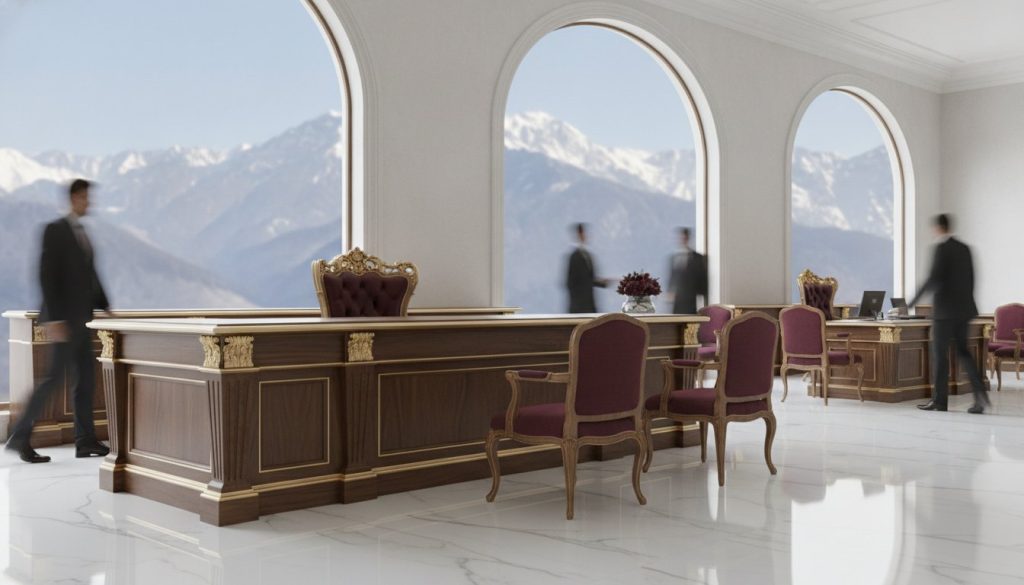
In high-density work environments, durability is a measurable engineering standard rather than a vague marketing claim. You’ve likely noticed how quickly standard desks and chairs show signs of wear. Stains, tears, and structural failures lead to high replacement costs and a degraded office aesthetic. It’s a common challenge for growing businesses in Jammu and Kashmir to find high traffic office furniture that remains functional and professional under constant daily use.
This guide provides the framework you need to select commercial-grade pieces that last for years. You’ll learn how to navigate the mandatory BIS certification standards enforced since February 14, 2026. We’ll identify specific quality markers like IS 17631:2022 for work chairs and IS 17633:2022 for tables. We will also preview the best materials for high-density settings and explain how to source bulk orders from reliable local Jammu and Kashmir suppliers to reduce long-term expenditure. This approach ensures your workspace maintains its professional appearance without the constant cycle of furniture failure.
Key Takeaways
- Identify high-use zones like reception areas and co-working hubs to determine where commercial-grade furniture is most critical for your J&K office.
- Evaluate material integrity by prioritizing reinforced steel frames and high Wyzenbeek rub counts to prevent premature upholstery failure.
- Select high traffic office furniture that meets specific Indian Standards (IS) for seating and surfaces to ensure long-term structural reliability.
- Implement strategic layout planning and climate-specific maintenance to protect your investment from the unique environmental conditions in Jammu and Kashmir.
- Leverage custom-made furniture solutions to maximize utility in non-standard office footprints while securing a reliable local supply chain for bulk orders.
Defining High-Traffic Office Environments and Their Demands
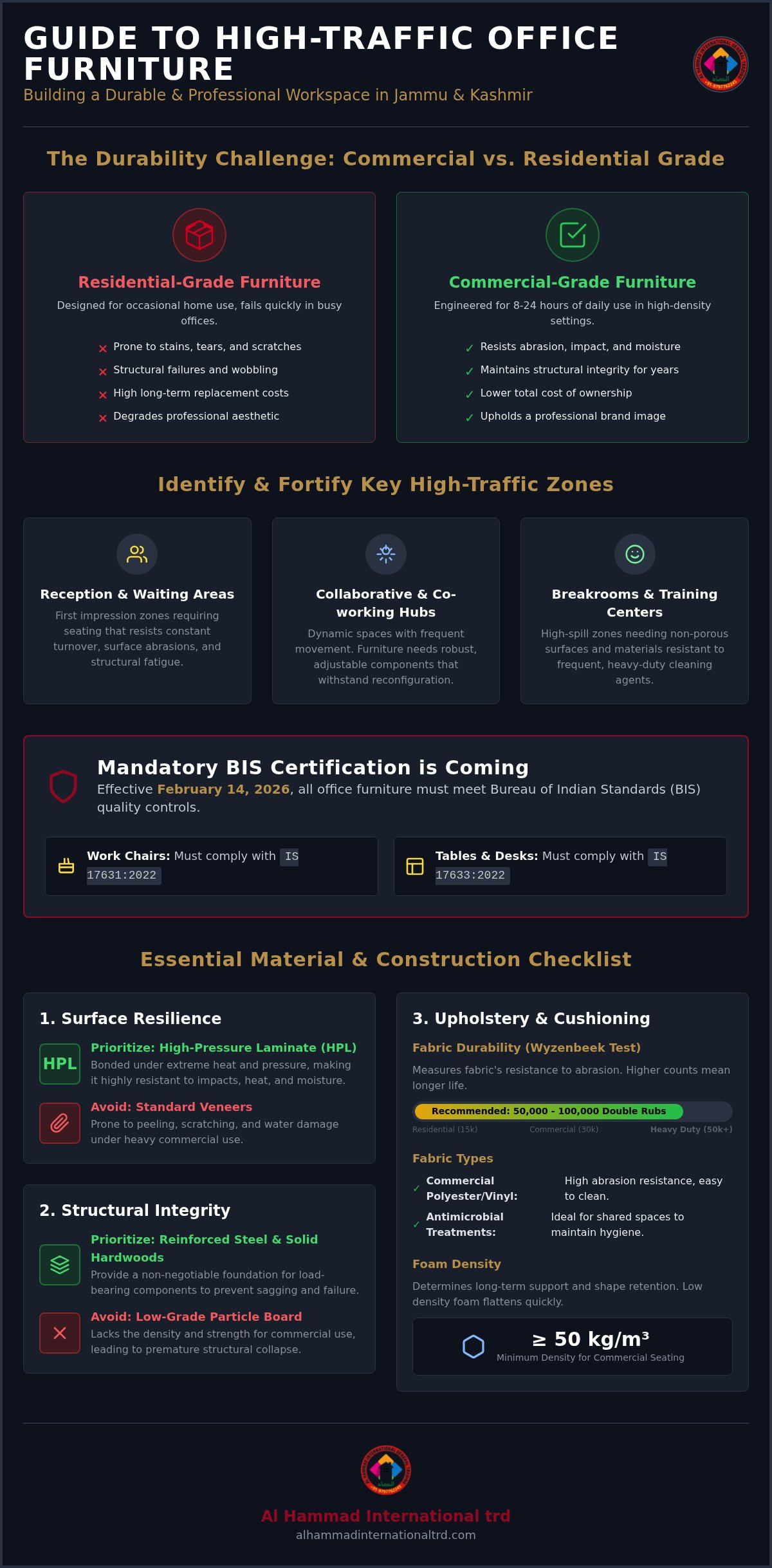
High-traffic environments are defined by the frequency of user rotation and the duration of daily use. In a standard Jammu and Kashmir office, furniture must withstand constant physical interaction. Residential-grade items often fail within months because they lack the structural reinforcement required for commercial duty. Selecting high traffic office furniture requires a focus on the performance lifecycle. This is the period during which a piece remains functional and visually professional before requiring replacement.
Understanding different office furniture categories is the first step toward effective procurement. Commercial-grade items are engineered for 8 to 24 hours of daily use. In contrast, retail items are generally designed for occasional household activity. Worn furniture does more than just look bad. It signals neglect to your clients and can lower employee morale. A professional environment demands furniture that maintains its integrity under pressure.
The Cost of Frequent Replacement vs. Initial Investment
Selecting lower-cost options often results in a higher total cost of ownership over a five-year period. When a desk or chair fails, you aren’t just paying for a new item. You’re also paying for logistics, disposal, and the downtime associated with the replacement process. Worn-out furniture also carries a hidden cost: brand degradation. Stained upholstery or wobbly tables suggest a lack of attention to detail. This can influence client trust and employee retention. Moving from a retail mindset to a strategic procurement mindset means evaluating furniture based on its annual cost over its expected lifespan rather than the sticker price.
High-Traffic Zones in Modern J&K Offices
Certain areas in a workspace endure more stress than others. Identifying these zones helps you allocate your budget where it’s needed most. These high-density areas require the most durable specifications available in the high traffic office furniture market.
- Reception and waiting areas: These are the first physical touchpoints for visitors. Seating here faces constant turnover and must resist surface abrasions and structural fatigue.
- Collaborative zones and co-working hubs: These areas see frequent movement and reconfiguration. Furniture must be easy to adjust without the mechanical components failing.
- Breakrooms and training centers: These zones are prone to spills and heavy cleaning. Surfaces must be non-porous and resistant to industrial cleaning agents.
As of February 14, 2026, the Government of India has mandated BIS certification for office furniture. This means durability is no longer just a preference; it’s a regulated standard. Businesses in J&K must now prioritize certified products that meet these rigorous quality controls to ensure their investment remains compliant and functional.
The Essential Material and Construction Checklist
High-performance workspaces require materials that go beyond aesthetics. When selecting high traffic office furniture, you must evaluate the internal components that aren’t always visible. The Business and Institutional Furniture Manufacturers Association (BIFMA) provides global benchmarks, but since February 14, 2026, Indian businesses must also look for ISI markings. These marks confirm compliance with mandatory standards like IS 17631:2022 for chairs and IS 17633:2022 for tables.
Surface resilience is a primary concern. High-pressure laminates (HPL) are the industry standard for commercial desks and workstations. Unlike standard veneers that peel or scratch under heavy use, HPL is bonded under extreme heat and pressure. This makes it resistant to impacts, heat, and moisture. For structural components, reinforced steel and solid hardwoods are non-negotiable. Avoid low-grade particle boards in load-bearing zones to prevent structural sagging over time.
Upholstery and Fabric Selection for Heavy Use
Fabric durability is measured by the Wyzenbeek rub count. For heavy-duty commercial use, look for fabrics rated for at least 50,000 to 100,000 double rubs. Commercial-grade polyester and vinyl are ideal because they offer high abrasion resistance and are easy to disinfect. In shared co-working spaces, antimicrobial treatments help maintain hygiene and safety. While breathable mesh is popular for airflow, high-density foam is often better for long-term support. Look for foam with a density of at least 50kg/m³ to ensure the seat doesn’t lose its shape after months of constant rotation.
Structural Reinforcements to Look For
The way a piece is put together is as important as the material itself. Wooden frames should utilize corner blocking and double-doweling rather than just glue and staples. For metal components, powder-coated finishes are essential in Jammu and Kashmir to prevent rust during humid seasons. Hardware like gas lifts and casters should be rated for 24/7 use to handle frequent adjustments. If your project has unique dimensions or specific durability needs, consider custom made furniture that can be built to these industrial specifications. Weight capacity is another critical factor. Ensure all seating is rated for at least 136kg to accommodate all body types safely and reliably.
Seating and Surface Standards for Constant Rotation
High-traffic environments require furniture that accommodates multiple users within a single shift. In these settings, high traffic office furniture must facilitate constant rotation without mechanical degradation. When different employees adjust the same chair or desk multiple times a day, the components face accelerated wear. Structural reliability becomes the priority over purely decorative features.
Shared workstations and communal tables face continuous physical interaction. This demands a focus on industrial-grade hardware. From the tension in a chair’s backrest to the glide of a storage drawer, every moving part must be engineered for longevity. Selecting items that meet the Furniture (Quality Control) Order, 2025 standards ensures your inventory remains compliant with Indian regulations starting February 14, 2026.
Ergonomic Task Seating Checklist
Shared task chairs require industrial-grade adjustability. The mechanisms for seat height, back tilt, and armrest position must remain fluid over thousands of cycles. While nylon bases are common for standard use, cast aluminum offers superior long-term stability and better weight distribution for high-density offices. BIFMA standards for 2026 seating performance require that load-bearing components withstand rigorous stress tests to ensure safety for users up to 136kg. Look for these specific seating features:
- Heavy-duty gas cylinders rated for 24-hour use.
- Reinforced casters suitable for both hard floors and commercial carpets.
- Tension control systems that don’t lose calibration after frequent adjustments.
Durable Worksurfaces and Desks
Workstations in co-working hubs or training centers are prone to surface damage. Scratch-resistant tops are essential to prevent aesthetic degradation. Impact-resistant edging, specifically 2mm or 3mm PVC edge banding, prevents the core material from being exposed to moisture or peeling. This is particularly important for preventing “corner clipping” in busy walkways.
Conference tables face unique demands. They must support heavy technology integration, including pop-up power modules and cable management trays. These features reduce physical wear by keeping wires organized and preventing users from moving the furniture to access outlets. Integrated storage units in these zones should feature heavy-duty, ball-bearing drawer slides. These slides ensure smooth operation even when drawers are loaded to their maximum capacity. Choosing furniture that meets IS 17633:2022 standards for tables and desks ensures your workstations can handle the physical impact of daily office life in J&K. This proactive approach to procurement minimizes the need for replacements and maintains a high-quality office appearance.
Strategic Layout and Maintenance for Longevity
Strategic placement significantly extends the service life of high traffic office furniture. Poorly planned layouts often lead to “corner clipping,” where staff and visitors frequently snag bags or equipment on desk edges. This doesn’t just cause aesthetic damage; it leads to structural fatigue over time. Effective traffic flow management ensures that furniture isn’t positioned in narrow bottlenecks where accidental impacts are inevitable.
Maintenance is equally critical for preserving your investment. Establishing a quarterly furniture audit is a practical way to catch minor issues before they become terminal failures. A simple tightening schedule for bolts and screws prevents the permanent misalignment of frames. You should also implement strict cleaning protocols. Standard household cleaners often contain harsh solvents that strip protective coatings from commercial-grade finishes. Stick to pH-neutral agents and microfiber cloths to maintain surface integrity without causing chemical degradation.
Layout Planning for Reduced Wear
Proper spacing prevents wall damage and upholstery friction. Ensure a minimum clearance of 10cm between furniture and walls to avoid scuffing. In co-working hubs, use modular pieces that allow you to rotate high-wear items periodically. Moving a chair from a busy reception area to a quiet private office every six months balances the wear across your entire inventory. For non-standard office footprints, custom commercial furniture India provides a strategic advantage. Bespoke pieces are built to fit your specific spatial constraints, which eliminates the cramped layouts that lead to premature wear.
Local Maintenance Tips for J&K Businesses
The Jammu and Kashmir climate presents unique challenges for commercial furniture. Temperature fluctuations in the region cause wood to expand and contract, which can loosen joints. Keep wooden desks away from direct heat sources and ensure your HVAC system maintains consistent humidity levels. For businesses with external seating areas, commercial outdoor furniture India requires specific care. UV-resistant coatings and powder-coated frames are essential to resist moisture and sun damage. If you notice minor tears in commercial upholstery, address them immediately with industrial-grade repair kits. Small fixes prevent the inner foam from being exposed to air and moisture, which would otherwise lead to rapid degradation. View our full range of commercial-grade solutions to see how durable materials can simplify your maintenance routine.
Procuring Custom High-Traffic Solutions in Jammu and Kashmir
Procuring the right high traffic office furniture in Jammu and Kashmir requires a shift from retail browsing to industrial procurement. While mass-produced catalogs offer convenience, they frequently fall short when applied to the unique architectural footprints of local commercial spaces. Bespoke manufacturing allows you to specify reinforcements in the exact zones that experience the most stress. By working with a local provider like Al Hammad International trd, you bypass the logistical complexities of long-distance shipping and ensure that every piece is inspected on-site for structural integrity.
Selecting a local J&K partner also simplifies the verification of mandatory standards. Since the enforcement of the Furniture (Quality Control) Order on February 14, 2026, all commercial furniture must meet strict Indian Standards. Vetting a supplier involves more than checking a price list; it requires confirming their ability to deliver ISI-certified products that handle the physical demands of high-density work environments. This ensures your project remains compliant with national regulations while meeting local durability needs.
Why Custom-Made Furniture Wins in High-Traffic Areas
Customization is more than an aesthetic choice; it’s a durability strategy. When you commission pieces specifically for your office, you can dictate material thickness and joint reinforcement beyond standard retail specs. For instance, you might choose thicker HPL layers for reception desks or double-doweled joints for collaborative seating. This ensures your furniture aligns with your brand’s visual identity while meeting the rigorous demands of constant rotation. You can explore more about custom office furniture India to understand how tailored designs improve overall workspace efficiency.
Streamlining the Bulk Procurement Process
Large-scale projects demand a methodical approach to logistics. Managing lead times for a bulk furniture purchase India requires early coordination with your supplier to ensure aesthetic consistency across departments. A local J&K provider offers the advantage of on-site assembly and immediate quality inspections. This reduces the risk of transit damage and ensures that every unit meets the mandatory BIS standards. Establishing a long-term relationship with a regional specialist also simplifies future expansions, as they’ll have your specific material and finish records on file.
Final Procurement Checklist
Before signing a contract for high traffic office furniture, ask your provider these five critical questions:
- Does this specific model carry the ISI mark required by the 2025 Quality Control Order?
- What is the Wyzenbeek rub count rating for the specified upholstery?
- Are the drawer slides and door hinges rated for 24/7 commercial use?
- Can you provide a load-bearing certification for the seating bases up to 136kg?
- What are the specific maintenance protocols required to maintain the warranty in the J&K climate?
Future-Proofing Your Commercial Workspace
Selecting high traffic office furniture is a strategic move that shifts your business from reactive repairs to long-term operational stability. We’ve covered the technical markers of quality, from frame reinforcement to the impact of the Jammu and Kashmir climate on material longevity. Implementing these standards ensures your workspace handles constant rotation without sacrificing its professional aesthetic. A proactive approach to procurement and layout planning ultimately reduces your total expenditure while supporting a more efficient work culture.
Al Hammad International trd provides the local expertise needed to execute these large-scale projects. We specialize in custom-made commercial furniture and offer dedicated support across Jammu and Kashmir to streamline your delivery and assembly. Our focus on bulk procurement for hotels and offices means you get consistent quality across every department. Request a Consultation for Your High-Traffic Office Furniture Needs to align your office design with industrial-grade durability. Start building a workspace that’s ready for the demands of 2026 and beyond.
Frequently Asked Questions
What is the difference between residential and high-traffic office furniture?
The primary difference lies in the duty cycle and structural reinforcement. Residential furniture is typically engineered for two to four hours of daily use, whereas high traffic office furniture is built for continuous eight to twenty-four hour cycles. Commercial pieces utilize higher-density foam and heavy-gauge steel to prevent the frame fatigue and surface pilling that occur when standard household items are placed in a demanding professional environment.
How do I know if a chair is rated for high-traffic or 24/7 use?
Look for specific component testing certifications that mention shift-work or intensive use. A 24/7 rated chair features a reinforced gas cylinder and a cast aluminum or heavy-duty nylon base designed for constant movement. These chairs are subjected to thousands of additional adjustment cycles during testing to ensure the tilt and height mechanisms don’t lose their calibration under the stress of multiple different users throughout the day.
What are the best materials for office furniture in Jammu and Kashmir’s climate?
Materials that resist moisture-induced warping and oxidation are essential for the J&K region. High-pressure laminates with moisture-resistant bonding prevent the core material from swelling during humid seasons. For metal components, industrial powder coating is superior to standard paint because it creates a non-porous barrier against rust. These materials ensure that your workstations and storage units remain structurally stable despite the significant seasonal temperature shifts common in the area.
Does high-traffic furniture come with specific commercial warranties?
Yes, commercial warranties are generally more robust than retail versions, often covering structural components for five to ten years. These warranties specifically account for the wear and tear of a business environment, which would typically void a residential warranty. It’s important to distinguish between full coverage and pro-rated warranties. Always confirm that the coverage includes mechanical parts like drawer glides and gas lifts, which are the most common points of failure.
How often should high-traffic office furniture be inspected for maintenance?
You should conduct a formal inspection every ninety days to address joint fatigue and fastener loosening. In high-use environments, the constant vibration from movement can cause even high-quality bolts to back out slightly over time. Catching these issues early prevents permanent frame misalignment. A quarterly schedule ensures that your seating and desks remain safe for employees while protecting your long-term investment from the cumulative damage caused by minor structural instabilities.
Can custom-made furniture be as durable as mass-produced commercial brands?
Custom-made furniture often exceeds the durability of mass-produced brands because it allows for site-specific reinforcement. While mass production focuses on cost-optimization, custom manufacturing allows you to specify thicker surface laminates and double-doweled joints where they are needed most. This bespoke approach is particularly effective for unique floor plans in Jammu and Kashmir, ensuring that furniture fits perfectly and isn’t subjected to the accidental impacts caused by cramped, standard-sized layouts.
What is a Wyzenbeek rating, and why does it matter for office sofas?
A Wyzenbeek rating measures upholstery longevity by counting how many “double rubs” a fabric survives before the fibers break. For communal office sofas and reception seating, a rating of 50,000 to 100,000 double rubs is the benchmark for commercial durability. This rating is critical because it predicts how well the fabric will resist thinning, pilling, or tearing in areas that face constant friction from different users throughout the business day.
Is it better to buy bulk furniture online or from a local J&K supplier?
Choosing a local provider like Al Hammad International trd offers significant advantages over online retailers for high traffic office furniture. Local procurement allows for immediate on-site quality inspections and professional assembly, which are often missing from e-commerce deliveries. Our presence in Jammu and Kashmir ensures that any future expansion or logistical needs are handled with regional expertise, providing a level of accountability and service that distant online suppliers cannot match.