
Did you know that as of February 2026, every dining table sold in India must carry a mandatory BIS certification mark for quality assurance? This regulation ensures that when you invest in dining room furniture India retailers offer, you’re getting a product that meets strict safety and durability standards. Selecting the right set is no longer just about aesthetics. It’s about navigating these quality controls while finding pieces that fit smaller urban apartments or accommodate large, multi-generational families.
Finding the right balance between style and utility is a common challenge for Indian homeowners. Issues like wood warping in regional climates or marble staining can turn a significant investment into a maintenance burden. This guide promises to simplify the process. You’ll learn to identify durable materials, navigate the 18% GST landscape, and apply Vastu principles for a balanced home. We’ll examine space-saving designs and the benefits of custom made furniture to ensure your dining area meets your specific family needs. From seasoned Deodar wood for colder regions to modern Japandi styles, this overview covers everything required for a functional dining space.
Key Takeaways
- Learn the 36-inch rule for calculating clearance to ensure your dining area remains functional and easy to navigate.
- Discover which materials withstand the unique Jammu and Kashmir climate, focusing on seasoned wood and heat-resistant stone.
- Compare rectangular and round table configurations to find the best dining room furniture India offers for your specific room dimensions.
- Master Vastu Shastra principles and layout strategies to create an auspicious, clutter-free environment for family meals.
- Explore the benefits of custom made furniture for tailoring dining sets to the unique architectural layouts found in J&K homes.
Measuring Your Dining Space: Size and Clearance Standards
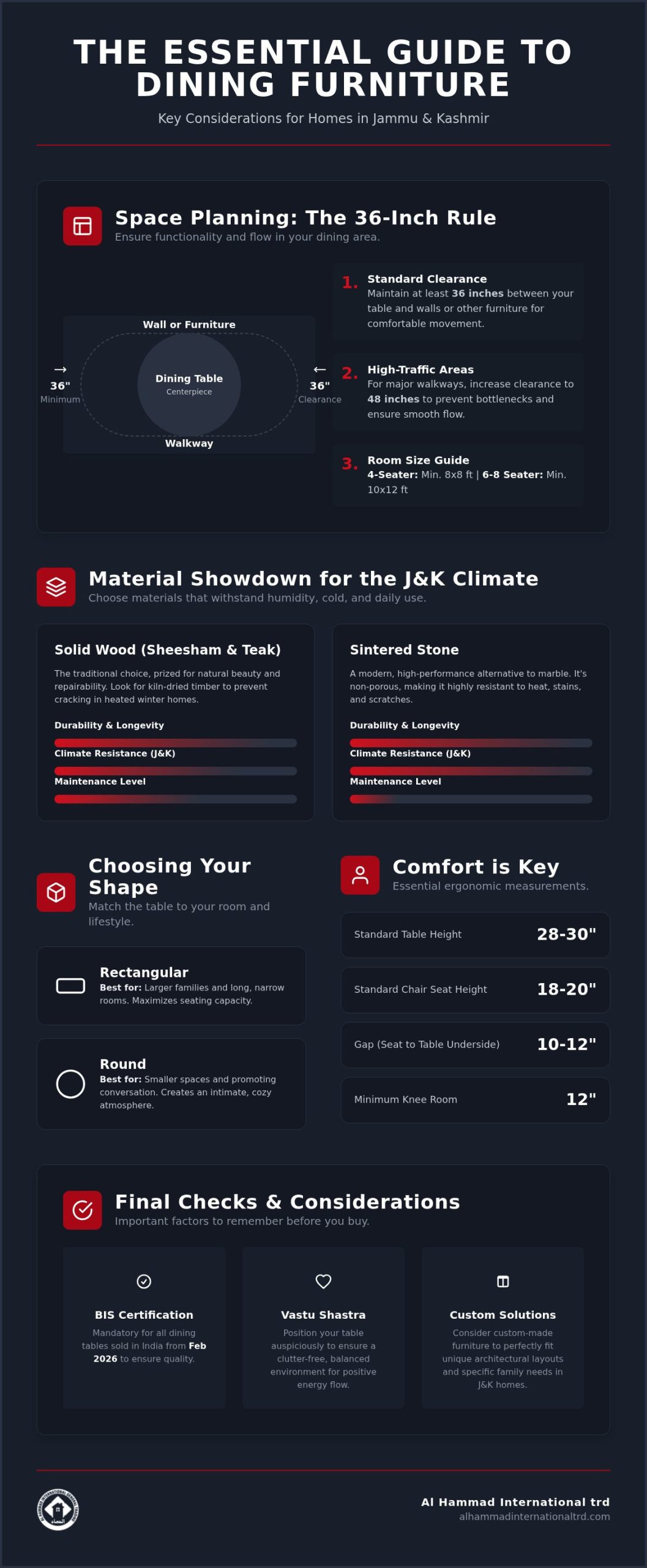
Measuring the room is more critical than measuring the table itself. A table that looks perfect in a showroom might overwhelm a compact urban dining nook once delivered. When purchasing dining room furniture India homeowners should prioritize the 36-inch rule. This standard requires at least 36 inches of clearance between the table edge and the nearest wall or furniture piece. This space allows guests to pull out chairs and move behind seated individuals without difficulty.
If your layout includes a sideboard or console table, measure from the edge of those items rather than the wall. For high-traffic zones, increasing this clearance to 48 inches is recommended. To avoid errors, use painter’s tape to outline the table’s footprint on your floor. This physical visualization helps you feel the flow of the room before making a financial commitment. Proper planning also allows you to integrate Vastu Shastra principles by ensuring the table is placed in an auspicious location without blocking energy flow or physical pathways.
Seating Capacity vs. Floor Area
Selecting the right capacity depends on your household size and how often you host guests. Compact 4-seater sets are ideal for smaller apartments in Jammu and Kashmir, typically requiring a floor area of at least 8×8 feet. Larger family homes often necessitate 6-seater or 8-seater configurations, which demand rectangular spaces of 10×12 feet or more. If you host occasionally, extendable dining tables offer a practical solution. These units maintain a smaller footprint for daily use but expand to accommodate larger gatherings, providing flexibility without permanently sacrificing floor space.
Standard Table Heights and Ergonomics
Most standard dining tables stand between 28 and 30 inches high. These pair with chairs that have a seat height of 18 to 20 inches. Counter-height sets are an alternative, usually reaching 34 to 36 inches, creating a more casual atmosphere. When selecting chairs, ensure there is a 10 to 12-inch gap between the seat and the underside of the table to prevent leg fatigue. For the average Indian adult, an ergonomic clearance of at least 12 inches of knee room is required to sit comfortably for extended periods. It’s a small detail that makes a significant difference during long family meals.
Material Selection for the Jammu and Kashmir Climate
Choosing materials for dining room furniture India offers requires a clear understanding of regional environmental stressors. In Jammu and Kashmir, the cycle of freezing winters and humid summers tests the structural integrity of every piece. Solid wood is the preferred choice for its natural ability to breathe, provided it meets Indian wood durability standards. While engineered wood is cost-effective, it often lacks the repairability of solid timber when exposed to extreme moisture fluctuations. Metal and tempered glass accents can add a modern aesthetic, but they don’t provide the same thermal comfort as natural materials during colder months.
Upholstery also plays a vital role in longevity and maintenance. Leatherette is a utilitarian choice for busy families because it wipes clean and resists spills. If you prefer the warmth of fabric, look for high-rub count synthetics that resist pilling and staining. For those with specific spatial or aesthetic requirements, exploring custom made furniture allows for precise material matching tailored specifically to the J&K climate.
Solid Wood: Sheesham, Teak, and Rubberwood
Sheesham remains a top selection for Indian dining sets due to its dense grain and resistance to decay. However, J&K’s indoor heating during winter can cause unseasoned wood to shrink and crack. Homeowners should look for kiln-dried timber to ensure stability. Teak is another premium option, offering high oil content that naturally repels moisture. For daily maintenance, a matte finish is often more practical than high-gloss. Matte surfaces hide minor scratches and dust more effectively, keeping the set looking newer for longer.
Modern Sintered Stone and Marble
Sintered stone has gained popularity in 2026 as a high-performance alternative to natural marble. It’s manufactured under extreme pressure, making it non-porous and highly resistant to heat and stains. Natural marble remains a luxury standard but requires regular sealing to prevent staining from acidic foods common in Indian cuisine. Both materials are heavy. They must be paired with robust metal or solid wood frames to prevent structural sagging over time. These stone tops provide an excellent surface for hot serving dishes, though using trivets is still a good practice for long-term care.
Comparing Dining Table Shapes and Seating Capacities
The shape of a dining table dictates the room’s flow and the social atmosphere of your meals. Rectangular tables remain the traditional choice for large families in India, providing ample surface area for multiple serving dishes and formal seating arrangements. These tables typically seat six to twelve people, making them a staple for multi-generational households. For those living in compact urban flats, round tables promote conversation and save space by eliminating sharp corners. Square tables work best in symmetrical rooms and are ideal for four-person households where intimacy is preferred. Oval tables offer a functional compromise, providing the seating capacity of a rectangle with the softened edges of a round design, which is safer for homes with young children.
When sourcing dining room furniture India shoppers often look toward established Indian Furniture Hubs for inspiration and quality benchmarks. These centers showcase how different shapes impact the utility of a dining space. A rectangular table might seat six people comfortably, but it requires a long, narrow room to avoid blocking walkways. Conversely, a round table can often accommodate an extra guest without much disruption to the seating plan. Choosing the right shape ensures that the furniture complements the room’s architecture rather than fighting against it.
Choosing Between Chairs and Benches
Dining benches have become a popular trend for a casual, space-saving look. They can be tucked completely under the table when not in use, which is ideal for narrow dining areas or corridors. For a more formal aesthetic, combining high-back armchairs at the heads of the table with side chairs along the length is a standard approach. If you frequently host large gatherings, keep a few stackable chairs in storage. These provide occasional guest seating without cluttering the room on a daily basis. Mixing seating types can also create a more modern, eclectic feel while maintaining comfort.
Storage-Integrated Dining Sets
Modern dining sets often feature built-in drawers for storing cutlery, napkins, and table linens. This integration reduces the need for additional bulky furniture in small rooms, keeping essentials within reach. To create a cohesive look, many homeowners coordinate their tables with matching sideboards or crockery cabinets. For more details on selecting high-end pieces for regional homes, refer to our Premium Indoor Furniture Guide for Jammu and Kashmir Homes. These storage solutions help maintain an organized environment, ensuring your dining room furniture India setup remains functional and clutter-free.
Functional Layouts and Vastu Shastra Principles
Proper placement of dining room furniture India requires balancing traditional wisdom with modern spatial constraints. Vastu Shastra suggests the west, south, or east directions for the dining area. The west is considered particularly auspicious for promoting family health and wealth. Avoid placing the table directly in front of the main entrance or the kitchen door. This prevents a “clutter trap” where the table becomes a catchment area for household items. Efficient layouts ensure a clear path between the cooking zone and the seating area without obstructing the natural flow of the room.
Lighting and mirrors significantly impact the dining experience. A central chandelier or pendant light creates a focal point and provides warm illumination for evening meals. Recessed LED lighting offers a more utilitarian approach for daily tasks. Placing a large mirror on the north or east wall to reflect the dining table is a common practice. It symbolically doubles the prosperity of the household and visually expands a small room. For those requiring specific dimensions or materials to satisfy these Vastu requirements, explore our custom made furniture options to find a perfect fit.
Vastu Directions for Positive Energy
The direction you face while eating is believed to influence digestion and energy levels. Vastu principles recommend that the head of the family faces east. Other family members may face north or west, but facing south is generally avoided. When selecting your dining room furniture India, consider how the chair orientation aligns with these directions. Colors also play a role. Earthy tones like terracotta, mustard, or olive green are trending in 2026. These shades complement natural wood and align with Vastu recommendations for a peaceful dining environment.
Creating a Multi-Functional Zone
Modern Indian homes often use the dining area as a secondary workspace or a social hub. Adapting the table for work-from-home needs requires a durable surface that resists scratches from laptops and stationery. Use area rugs to define the dining zone within an open-plan living room. This creates a psychological boundary without the need for walls. Open shelving can also serve as a divider while providing storage for both crockery and office supplies. Integrating nearby appliances, such as a compact beverage cooler or a warming drawer, ensures a seamless serving experience during gatherings. This layout keeps the host engaged with guests while maintaining an organized, multi-purpose space.
Bespoke Solutions: Custom Dining Furniture in J&K
Ready-made sets often fail to account for the non-standard room dimensions found in regional architecture. When searching for dining room furniture India consumers frequently find that mass-produced pieces are either too large for modern nooks or too small for traditional family halls. Custom manufacturing bridges this gap. It allows for the adjustment of table lengths, chair heights, and even the curvature of the edges to suit specific alcoves. By choosing a bespoke approach, you ensure that every square inch of your dining area is utilized efficiently. This is particularly useful in homes with unique features like floor-level heating systems or localized architectural pillars.
Customization also extends to aesthetic harmony. You can select specific wood grains, such as seasoned Deodar or Sheesham, to match the existing woodwork in your home. Choosing the right upholstery is equally important for a cohesive look. You can opt for heavy-duty fabrics or premium leatherette that perfectly complements your interior palette. The Al Hammad International trd process is straightforward and utilitarian. It begins with your design specifications, followed by precise manufacturing and local delivery within Jammu and Kashmir. This methodical approach eliminates the guesswork and frustration often associated with online catalog shopping.
Ordering Your Custom Set with Al Hammad International trd
Local production offers significant benefits over importing sets from other regions. You gain direct communication with the supplier, ensuring that your specific requirements are understood and executed without translation errors. Quality control is more rigorous when the manufacturing happens nearby, allowing for inspections during the build process. Additionally, local delivery significantly reduces the shipping risks inherent in long-distance transport. Furniture often suffers structural stress or minor cosmetic damage during transit across state lines. By sourcing locally, you minimize these risks while supporting Jammu and Kashmir businesses and regional craftsmanship.
Starting your project is a simple, business-first process. We offer consultations to discuss your specific bespoke indoor furniture requirements. Whether you need a compact four-seater for a city apartment or a massive twelve-seater for a multi-generational family estate, we provide the technical expertise to build it. Our service also includes the option to coordinate your new dining room furniture India setup with premium home appliances. This integrated approach ensures that your space is both stylish and highly functional for daily use. Contact Al Hammad International trd for custom made furniture India today to begin your design journey.
Building a Lasting Dining Space
Selecting the right dining room furniture India offers requires balancing technical specifications with regional requirements. You’ve learned how the 36-inch clearance rule prevents cramped layouts and why seasoned, kiln-dried materials are essential for the Jammu and Kashmir climate. Integrating Vastu Shastra principles ensures your space isn’t just functional, but also a harmonious center for family life. Prioritizing durability and ergonomic standards will yield long-term utility for your household.
Al Hammad International trd provides reliable solutions for J&K residences. We are specialists in custom-made furniture designed to meet unique architectural needs. Our inventory covers complete home furnishing, including both high-quality indoor pieces and essential appliances. This integrated approach ensures a seamless setup process for modern homeowners. Our local presence in Jammu and Kashmir guarantees direct communication and dependable service for every project.
Browse Premium Dining Collections at Al Hammad International trd today. It’s the most efficient way to secure furniture that fits your space and your lifestyle perfectly. We look forward to helping you equip your home with quality and precision.
Frequently Asked Questions
What is the best material for a dining table in the Indian climate?
Solid wood like Teak or Sheesham is the best choice for the Indian climate due to its natural durability and resistance to pests. For regions like Jammu and Kashmir, kiln-dried wood is highly recommended as it resists warping during cold winters. Sintered stone is a modern alternative that handles high temperatures and humidity without staining, making it a utilitarian choice for high-traffic dining areas.
How much space should I leave between the dining table and the wall?
You should leave at least 36 inches between the table edge and the wall or other furniture. This clearance allows guests to pull out chairs and sit comfortably without hitting the wall. If the area serves as a primary walkway, increase this distance to 48 inches. Proper spacing ensures that your dining room furniture India setup remains functional and doesn’t feel cramped during large family gatherings.
Are 6-seater dining sets better than 4-seater sets for small families?
A 4-seater set is usually sufficient for a small family of four and fits better in compact urban apartments. However, a 6-seater set is more practical if you frequently host guests or have the floor space to spare. 6-seater tables offer more room for serving dishes, which is helpful for traditional Indian meals that involve multiple platters. Consider extendable tables as a flexible middle ground for smaller rooms.
Is marble better than solid wood for a dining table top?
Marble is superior for heat resistance and provides a luxury aesthetic, but it is porous and prone to staining from acidic foods. Solid wood offers a warmer feel and is easier to repair if scratched or dented. For a busy household, solid wood is often more practical. If you prefer the look of stone without the maintenance, sintered stone is a highly durable and non-porous alternative for modern dining tops.
How do I choose a dining table according to Vastu Shastra?
Select a square or rectangular table to follow Vastu Shastra principles, as these shapes symbolize stability and balance. Place the table in the west or south-east part of the room for the best results. Ensure that the head of the family faces east while eating to promote health and positive energy. When arranging your dining room furniture India, avoid placing the table directly under a structural beam or facing the main door.
Can I get custom-made dining furniture in Jammu and Kashmir?
Yes, you can obtain custom-made dining furniture in Jammu and Kashmir through local specialists like Al Hammad International trd. Custom solutions allow you to specify exact dimensions, wood types, and upholstery to fit unique architectural layouts. This bespoke approach is ideal for homes with non-standard room sizes where ready-made sets from national retailers might not fit properly. Local manufacturing also ensures better quality control and reduced shipping risks.
What is the standard height for a dining table in India?
The standard height for a dining table in India is between 28 and 30 inches. This height is designed to pair with chairs that have a seat height of 18 to 20 inches. This configuration provides approximately 10 to 12 inches of legroom, which is the ergonomic standard for the average adult. Counter-height tables are taller, usually measuring 34 to 36 inches, but these are generally used for casual dining rather than formal meals.
Should I choose a round or rectangular dining table for a small room?
A round table is generally better for a small, square room or a corner nook because it has a smaller footprint and improves traffic flow. The lack of sharp corners makes it easier to navigate in tight spaces. However, if your small room is narrow and rectangular, a slim rectangular table pushed against a wall might be more space-efficient. Always measure your specific clearance before deciding on a shape to ensure the room remains navigable.